August 21, 2026 · 6-min read
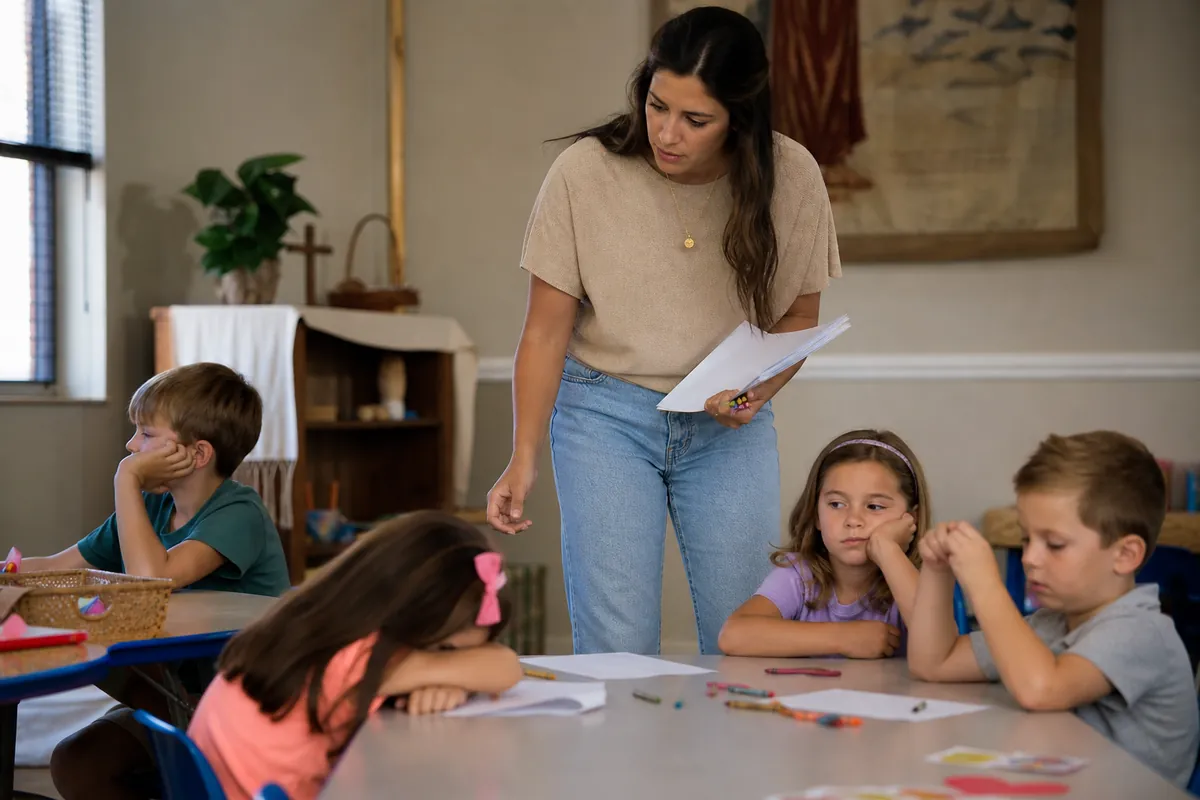
How to Handle a Kid Who Says They're Bored in Sunday School
The class has gone quiet, arms are crossed, and someone just said the word out loud. Here's what to do next.

When a kid says they're bored in Sunday school, the fastest fix is to change what they're doing, not what you're saying. Swap listening for a hands-on task, a question they get to answer out loud, or a short burst of movement, and do it within the next two minutes.
That's the short version. Here's how to actually pull it off mid-lesson, without losing the rest of the class in the process.
What does "bored" actually mean in this moment?
Kids rarely mean "this topic is uninteresting." They mean one of a few specific things:
- Their body needs to move and they've been sitting too long.
- They already know this story and want something new to do with it.
- They don't understand what's happening and have quietly given up.
- Nobody has asked them anything in a while.
Figuring out which one it is takes about five seconds of watching. A kid who's fidgeting and poking their neighbor needs movement. A kid who's staring blankly needs a way back in. A kid who blurts "I know this one" needs a harder question.
How do I respond without derailing the whole class?
You don't need a speech. A calm, quick redirect works better than an explanation.
Try one of these, on the spot:
- Hand them a job. "Can you hold up the picture when I get to that part?" Kids rarely turn down a job.
- Ask them the next question. Skip ahead and ask the bored kid what they think happens next in the story.
- Add a movement beat. Stand up, act out one line, sit back down. Ten seconds resets a room.
- Offer a choice. "Do you want to draw this part or tell me about it?" Choice re-engages kids who feel talked at.
None of these require you to abandon your lesson plan. They just change the delivery for a minute or two.
What should I do before the lesson to prevent this?
The best fix happens before class starts. A lesson with only one mode — you talking, they listening — will lose most kids under twelve, no matter how good the story is.
Build in at least three shifts:
- Tell part of the story.
- Do something with it — act it out, sort pictures, answer a question in pairs.
- Talk about it together, with a real question, not a rhetorical one.
Even a simple story like the Good Samaritan (Luke 10:25-37) can carry a "tell, do, talk" structure: read the parable, have kids point to who they'd want to help them, then ask who's hard to love this week. That last question is where the actual teaching happens, not the retelling.
If you're short on hands-on ideas, a quick object lesson using things already in the room can buy you a lot of engagement for very little prep — the same principle we cover in how to do a Bible object lesson with things from your kitchen.
How do I handle it without losing classroom control?
A bored kid who starts distracting others is a different problem than a bored kid who's just quiet. Deal with the room, not just the one kid.
- Move, don't lecture. Standing up to teach the next two minutes resets attention for everyone, not just the one who spoke up.
- Lower the stakes of participation. "Thumbs up or down" or "point to the picture" lets shy or checked-out kids re-enter without being put on the spot.
- Use proximity. Sitting or kneeling near a bored kid for the next minute often solves it without a single word.
- Save the hard conversation for after. If a kid is genuinely disruptive, not just bored, a quiet one-on-one after class works better than correcting them in front of everyone.
If interruptions rather than boredom are your actual issue, that's a slightly different fix — worth reading how to handle a kid who won't stop interrupting Bible time for that specific situation.

What if the same kid says it every single week?
A repeat offender is telling you something useful: your format isn't working for how they learn. Before assuming it's an attitude problem, try:
- Giving them a recurring role, like line leader, prayer helper, or picture holder.
- Asking them privately what part of class they actually like.
- Pairing them with a partner for discussion instead of asking them to answer in front of the group.
Some kids need to talk to learn. Some need to move. Some need to make something with their hands. "Bored" is often a kid telling you, in the only word they have, that the format doesn't fit them yet.
A small tool that helps here
If you'd rather not build "tell, do, talk" activities from scratch every week, a set of ready-made worksheets and sermon-note pages can take that pressure off. Our Christian church activity pack printable gives kids something to do with their hands during the lesson — coloring, matching, and simple note pages — so the hands-on part is already done for you. It's one option among many in the full shop if you're building out a class toolkit.
The main thing to remember
A bored kid isn't rejecting the Bible. They're asking for a different way in. Give them a job, a question, or something to do with their hands, and most of the time that's all it takes to get them back.
Frequently asked questions
- Why do kids get bored in Sunday school so easily?
- Most often it is not the Bible content itself, it is the format. Kids who sit still and listen all week at school need movement, choice, and a chance to talk, not another lecture, even a well-meaning one.
- Is it bad to let a kid say they are bored out loud?
- No. A kid who says it out loud is easier to help than one who checks out silently. Treat it as useful feedback about the lesson, not a discipline problem.
- How many activities should a 30-minute Sunday school lesson have?
- Aim for at least three shifts in what kids are doing, such as a short story, a hands-on activity, and a discussion or game. Changing the mode roughly every eight to ten minutes keeps most age groups with you.
- What if only one kid is bored and the rest of the class is fine?
- Give that one kid a small job, like holding the picture cards or being your helper for the next activity. A role often fixes disengagement faster than a redirection.
- Should I change the whole lesson plan on the spot if kids seem bored?
- You do not need to scrap it. Usually swapping the next five minutes for something hands-on or interactive is enough to reset the room and get back on track.
- classroom management
- sunday school
- kids church
- engagement
- volunteers
- bible activities
Related reading
- How to Teach Kids to Read the Bible for ThemselvesLearn how to teach kids to read the Bible with simple, Scripture-first steps that build confidence and understanding.
- How to Teach Kids to Confess Sin Without Shaming ThemLearn how to teach kids about confession without shame using simple words, calm tone, and Scripture that points straight to forgiveness, not fear.
- How to Teach Kids the Ten Commandments (Without a Boring List)A simple, Scripture-first way to teach kids the Ten Commandments through stories, actions, and everyday choices instead of memorization.