November 16, 2026 · 7-min read
Teaching Kids the Names of God: A Simple Starter List
Every name of God in the Bible tells a story about who He is — and kids can learn them faster than you think.
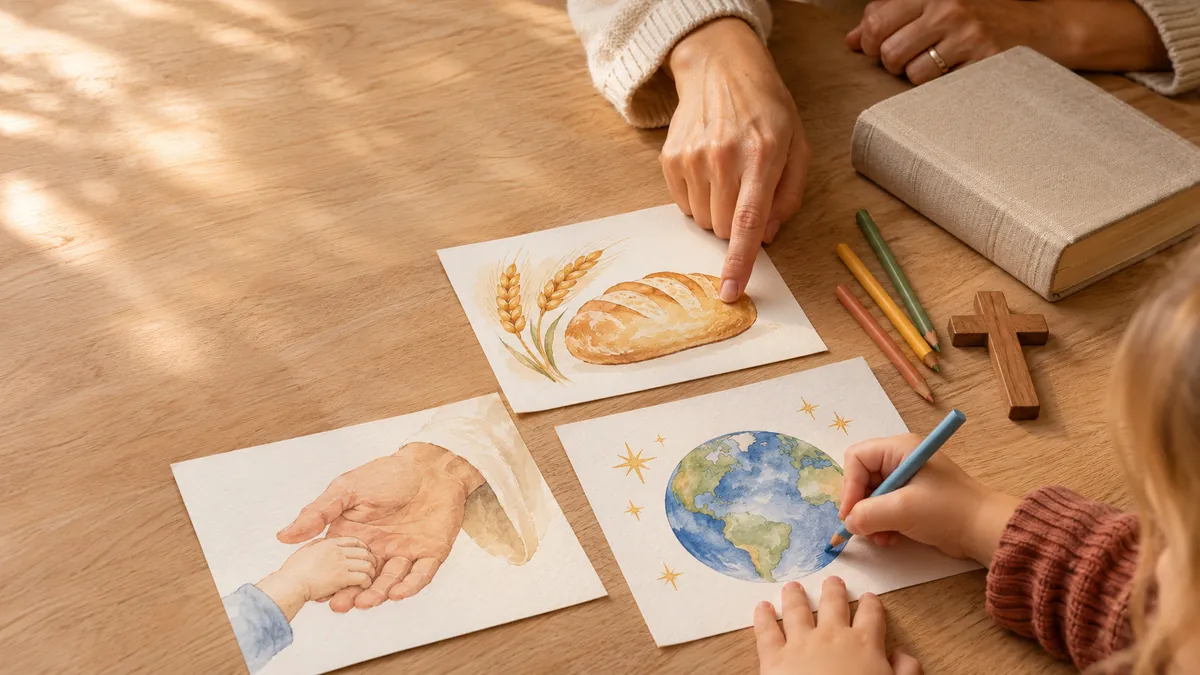
The names of God for kids are best taught one at a time, starting with a short list of names that connect to something a child already understands, like Father, Shepherd, or Helper. Each name reveals a different side of who God is, and kids remember them best when they can picture what the name means.
You don't need a seminary background to teach this well. You just need a few solid names, a simple meaning for each, and a little repetition over time.
Why teach kids the names of God?
In the Bible, names aren't just labels. They describe character.
When God introduces Himself by a new name in Scripture, He's usually revealing something He wants His people to know and trust about Him in that moment. Teaching kids these names gives them language for who God is, not just what God does.
A child who knows God as "Jehovah-Rapha, the God who heals" has something to hold onto when they're sick or scared. A child who only knows Bible stories without names often misses that deeper connection.
What's a good starter list of names of God?
Keep your first list short. Six to eight names is enough for a child to actually remember and use. Here's a solid starting point:
- Elohim — "God" or "Mighty Creator." The very first name used for God in Genesis 1.
- Jehovah-Jireh — "The Lord Will Provide." From Genesis 22, when God provided a ram for Abraham.
- Jehovah-Rapha — "The Lord Who Heals." Found in Exodus 15:26.
- El Shaddai — "God Almighty." Used often with the patriarchs, like in Genesis 17:1.
- Abba — "Father." The intimate, family word Jesus used in Mark 14:36.
- Jehovah-Shalom — "The Lord Is Peace." From Judges 6:24.
- The Good Shepherd — Jesus's own description of Himself in John 10:11.
- Emmanuel — "God With Us." Used for Jesus in Matthew 1:23.
Eight names, eight weeks (or eight bedtime chats), and your child has a working vocabulary for who God is.

How do I explain each name simply?
For each name, aim for one sentence a child could repeat back to you. Pair the name with the meaning and a tiny real-life connection.
Try this pattern:
- Say the name. "God is called Jehovah-Rapha."
- Give the one-line meaning. "That means 'The Lord Who Heals.'"
- Connect it to real life. "So when you're sick and we pray, we're asking the Healer to help you."
- Find the verse together. Even young kids can point to a verse in a kids' Bible while you read it aloud.
This four-step pattern works the same way whether you're at the breakfast table, in the car, or leading a Sunday school class of ten.
What activities help names of God stick?
Kids learn names of God best when there's something to do with their hands, not just words to hear.
A few ideas that work well across ages:
- Name cards. Write one name per card with a simple picture (a crown for King, a heart for Love, a sunrise for Jehovah-Jireh). Review a few each week.
- Name hunt. Give kids a kids' Bible and let them find and circle any name of God they spot in a chapter.
- Family name jar. Drop a slip of paper with a name of God into a jar. At dinner, pull one out and talk about what it means.
- Prayer by name. Encourage kids to use a specific name when they pray, like "Jehovah-Shalom, help me feel calm about my test."
That last one is a gentle bridge between learning names and actually praying with them. If you want more ideas for building a child's prayer life around who God is, How to Teach Kids to Pray has age-by-age guidance that pairs well with this list.

How do I keep it from feeling like a lecture?
Names of God can start to feel like vocabulary homework if you're not careful. A few guardrails help:
- One name at a time. Resist the urge to introduce the whole list in one sitting.
- Let questions lead. If a child asks why God has so many names, that's your actual teaching moment — more valuable than any planned lesson.
- Revisit, don't cram. Bring up a name you taught weeks ago in a new context. "Remember, God is Jehovah-Rapha? That's who we're praying to right now."
- Tie it to real moments. A skinned knee is a chance to mention the Healer. A tough test is a chance to mention the God of Peace.
If a child asks a question mid-lesson that you can't answer, that's normal and okay. How to Handle a Kid's Question That Stumps You in Bible Class has some steady, honest ways to respond in the moment.
What's a simple way to review the names over time?
Repetition beats intensity. A five-minute weekly review will do more than one long lesson.
Try rotating through these review methods:
- Flashcard flip. Show the name, child says the meaning (or vice versa).
- "Which name fits?" Describe a situation ("you're scared") and ask which name of God fits best.
- Coloring time. Quiet, repetitive activities like coloring give kids time to sit with a name and its meaning without pressure to perform or answer quickly.
On that note, if you're looking for something low-key to pair with this list, the God Knows Your Name — Affirmations Coloring Book gives kids a gentle way to sit with truths about who God says they are while their hands stay busy. It's a quiet companion to this kind of teaching, not a replacement for it. You can browse more resources like it in the shop if it's helpful.
A short list, held loosely
You don't need to teach every name of God in Scripture. A short, well-chosen list taught slowly and revisited often will serve a child far better than an exhaustive list rushed through once.
Start with one name this week. Let it sit. Add the next one when it feels natural.
Frequently asked questions
- What is the easiest name of God to teach a young child?
- Abba, meaning Father, is usually the easiest starting point. It is short, it connects to a relationship kids already understand, and it appears in the New Testament in a way that feels personal rather than distant.
- How many names does God have in the Bible?
- There is no single official count, since many names are really titles or descriptions of God's character woven throughout Scripture. A starter list of six to eight names is plenty for teaching children without overwhelming them.
- Why does it matter if kids learn God's names?
- Each name reveals something true about who God is and how He acts, so learning names helps children build a fuller, more accurate picture of God rather than just hearing stories about Him.
- What age should I start teaching names of God?
- You can start as young as preschool with simple names like Abba or Shepherd, then add more detailed names like Jehovah-Jireh or El Shaddai as children grow into elementary and middle school years.
- names of god
- bible teaching for kids
- sunday school
- homeschool bible
- character of god
- kids church
Related reading
- How to Explain the Trinity to Kids (Without Confusing Them)Learn how to explain the Trinity to kids with simple, accurate words and examples that avoid confusing analogies and stay close to Scripture.
- How to Teach Kids to Be a Good Friend (With Bible Verses)Bible verses about being a good friend for kids, plus simple ways to teach loyalty, kindness, and forgiveness at home or in Sunday school.
- Christmas Bible Activities for Kids: 9 Ideas for Home and Sunday SchoolChristmas Bible activities for kids that keep Jesus at the center: nine simple printable ideas for home, homeschool and Sunday school, from Advent pages to Nativity games.