August 24, 2026 · 6-min read
How to Teach Kids the Armor of God (Without a Costume)
You don't need a cardboard breastplate or a foil sword to teach this one well.
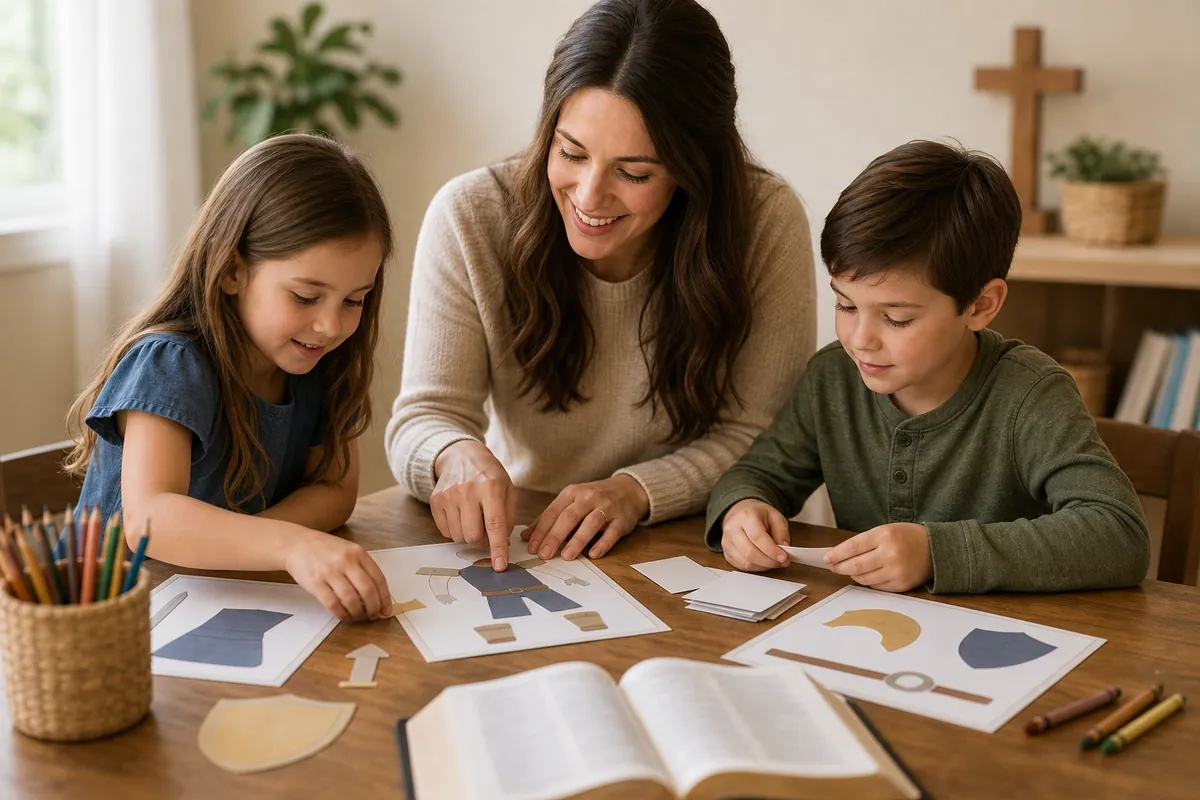
The fastest way to teach kids the armor of God is to skip the costume and go straight to the six ideas in Ephesians 6:10-18, using a real-life comparison for each one. Kids don't need to see a cardboard breastplate to understand what it means. They need to see how it connects to something they already feel, like being scared, tempted, or unsure what's true.
This passage gets turned into a big craft project a lot. That's not wrong, but it's not necessary either. If you've got twenty minutes and a Bible, you can teach this well.
What is the armor of God, in kid terms?
Paul wrote this passage to Christians who were dealing with real opposition, and he used armor as a picture they'd understand. Tell kids it's like this: God gives us everything we need to stay strong when life gets hard, the same way a soldier gets everything they need before a battle.
You're not fighting other people. Ephesians 6:12 says the struggle is "against the spiritual forces of evil," not flesh and blood. That's worth saying out loud to kids, because it stops them from picturing this as a fight against a sibling or a bully.
How do I explain each piece simply?
Here's a plain-language version of each piece you can use straight out of the passage. Read the verse first, then explain it in your own words.
- Belt of truth (v.14) — Knowing what's actually true holds everything else together, like a belt holds up pants so nothing falls apart.
- Breastplate of righteousness (v.14) — Doing right protects your heart, the same way a chest guard protects what's most important.
- Shoes of peace (v.15) — Being ready to share good news keeps you steady, like good shoes keep you steady on a rocky path.
- Shield of faith (v.16) — Trusting God blocks the doubts and lies that come at you, like a shield blocks arrows.
- Helmet of salvation (v.17) — Knowing you belong to God protects your thinking, the way a helmet protects your head.
- Sword of the Spirit (v.17) — God's Word is the one piece you can use to fight back, not just defend.
Go one at a time. Don't rush through all six in a single breath, or none of them will land.
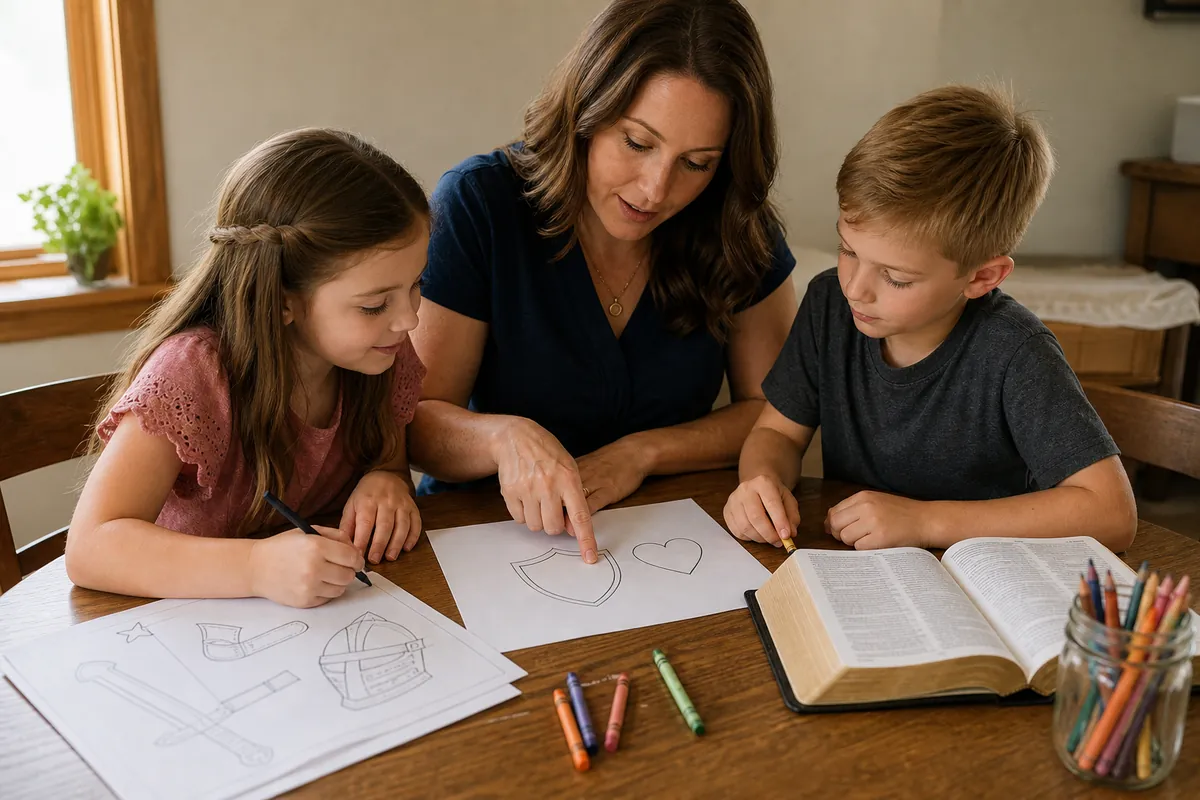
What's a no-prep way to teach this?
Try this instead of a craft project. It uses nothing but your voice and the Bible.
- Ask, "What's something that scares you or feels hard?" Let a few kids answer.
- Read Ephesians 6:10-11 aloud.
- Say, "God doesn't just tell us to be brave. He gives us what we need." That's the whole point of the passage in one sentence.
- Go through each piece using the list above. After each one, ask "When would you need this?" A shield of faith might come up when a kid is scared of something. A sword of the Spirit might come up when someone says something untrue about God.
- Close with verse 18, which is easy to skip but shouldn't be: pray. The passage doesn't end with a sword. It ends with praying "at all times in every prayer."
That's the whole lesson. No glue, no scissors, no trip to the craft aisle.
How do I make it stick without a costume?
Kids remember what connects to their actual life more than what they built with their hands. Try one or two of these instead of a full craft:
- Match game. Write the six pieces on cards and six struggles (fear, lying, doubt, meanness, temptation, worry) on separate cards. Kids match armor to struggle and explain why.
- One question per piece. Ask something like, "What's a lie you've heard that the belt of truth would fight?" Let it be quiet for a second. Kids need a beat to think.
- Say it back. Have kids explain one piece of armor to a partner in their own words. If they can explain it, they understood it.
If your group loves object lessons generally, this piece on a Bible object lesson using things from your kitchen has more ideas for teaching abstract truths with everyday items instead of crafts.
What if I only have a few minutes?
Pick one piece instead of all six. The shield of faith or the sword of the Spirit are usually the easiest entry points because kids can name a specific fear or a specific lie right away.
A shortened version:
- Read one verse.
- Ask one question tied to real life.
- Let one kid answer out loud.
- Pray about it together.
That's a full, honest lesson in under five minutes. You can come back next week for the next piece.
What questions bring this passage to life?
Questions do more work than explanations here. A few that tend to open kids up:
- "What's something you know is true even when it doesn't feel true?" (belt of truth)
- "When do you feel like you need to defend yourself?" (breastplate)
- "Has anyone ever told you something about God that wasn't right?" (sword of the Spirit)
- "What do you pray about the most?" (v.18, praying at all times)
Let the answers be short. You're not grading them, just opening a door.
A gentle next step
If your family or class likes digging into a passage verse by verse rather than all at once, the Kids Bible Study Worksheet | SOAP Method Printable walks kids through Scripture, Observation, Application, and Prayer for any passage, including this one. It's built for exactly this kind of slow, one-piece-at-a-time study. You can browse more printables like it in the shop if it's a good fit for your group.
However you teach it this week, the goal isn't a finished craft on the fridge. It's a kid who, next time they're scared or unsure, remembers that God already gave them what they need to stand firm.
Frequently asked questions
- What age is the armor of God appropriate to teach?
- Most kids can grasp the basic idea by age 5 or 6 using simple pictures and comparisons, while the deeper meaning of each piece lands better around ages 8 and up. You can teach the same passage at both levels, just adjust how much explanation you give for each piece.
- Do I need a costume or craft supplies to teach the armor of God?
- No. The passage is about spiritual readiness, not props. A few index cards, a Bible, and some good questions will teach it just as well as a full costume project, and often better because kids stay focused on the meaning.
- What is the main point of Ephesians 6:10-18?
- Paul is telling believers to stand firm against spiritual struggle by relying on what God provides, not their own strength. Each piece of armor represents something God gives us, like truth, righteousness, and prayer, to help us stay steady.
- How long does it take to teach the armor of God to kids?
- A single, focused lesson can be done in 20 to 30 minutes. You can also stretch it across six short sessions, one piece of armor at a time, which works well for a weekly Sunday school series.
- Why do some lessons on the armor of God fall flat with kids?
- Often it's because the craft or costume becomes the whole lesson and the meaning gets lost. Kids remember what a helmet looks like but not what it stands for. Keeping the focus on the ideas, not the props, helps the lesson actually stick.
- armor of god
- bible teaching tips
- sunday school ideas
- family devotions
- ephesians 6
- kids church
Related reading
- How to Teach Kids to Read the Bible for ThemselvesLearn how to teach kids to read the Bible with simple, Scripture-first steps that build confidence and understanding.
- How to Teach Kids the Creation Story in 7 Simple DaysLearn how to teach kids the creation story with seven simple, Scripture-first lessons from Genesis 1 for home, class, or church.
- How to Teach Kids to Confess Sin Without Shaming ThemLearn how to teach kids about confession without shame using simple words, calm tone, and Scripture that points straight to forgiveness, not fear.