November 18, 2026 · 7-min read
How to Teach Kids to Be a Good Friend (With Bible Verses)
Your child already knows how to make a friend. These verses and ideas help them learn how to keep one.
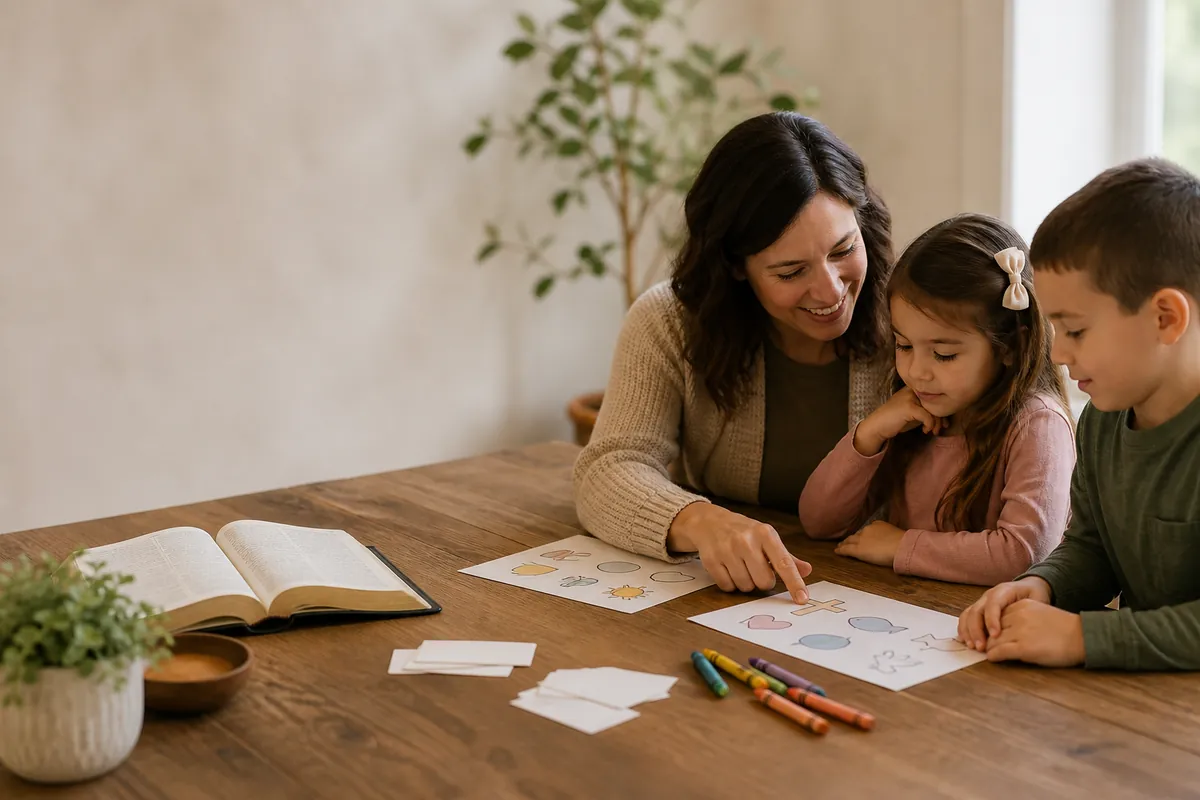
Bible verses about being a good friend for kids work best when they are tied to something your child can actually do today, not just memorized and set aside. Scripture gives us clear, simple pictures of friendship: loyalty, kindness, forgiveness, and showing up. Pair a verse with a real moment, and your child starts to see what good friendship looks like in their own life.
What does the Bible say about being a good friend?
The Bible describes friendship as loyal, honest, and sacrificial. It is less about being liked and more about how you treat people when it costs you something.
A few verses give kids an easy picture of this:
- Proverbs 17:17 — "A friend loves at all times, and a brother is born for adversity."
- John 15:13 — "Greater love has no one than this, that someone lay down his life for his friends."
- Proverbs 27:17 — "Iron sharpens iron, and one man sharpens another."
- 1 Thessalonians 5:11 — "Therefore encourage one another and build one another up."
For younger kids, keep it to one verse at a time. Older kids can hold two or three and start comparing what each one teaches about friendship.
How do I teach younger kids to be a good friend?
Young children learn through pictures and practice, not abstract ideas. Keep the lesson short and tied to something they can see or do.
Try this simple approach:
- Pick one verse. Proverbs 17:17 is a good starting point because "love at all times" is easy to say and repeat.
- Give a real example. Ask, "What does it look like to love your friend even when they're having a bad day?"
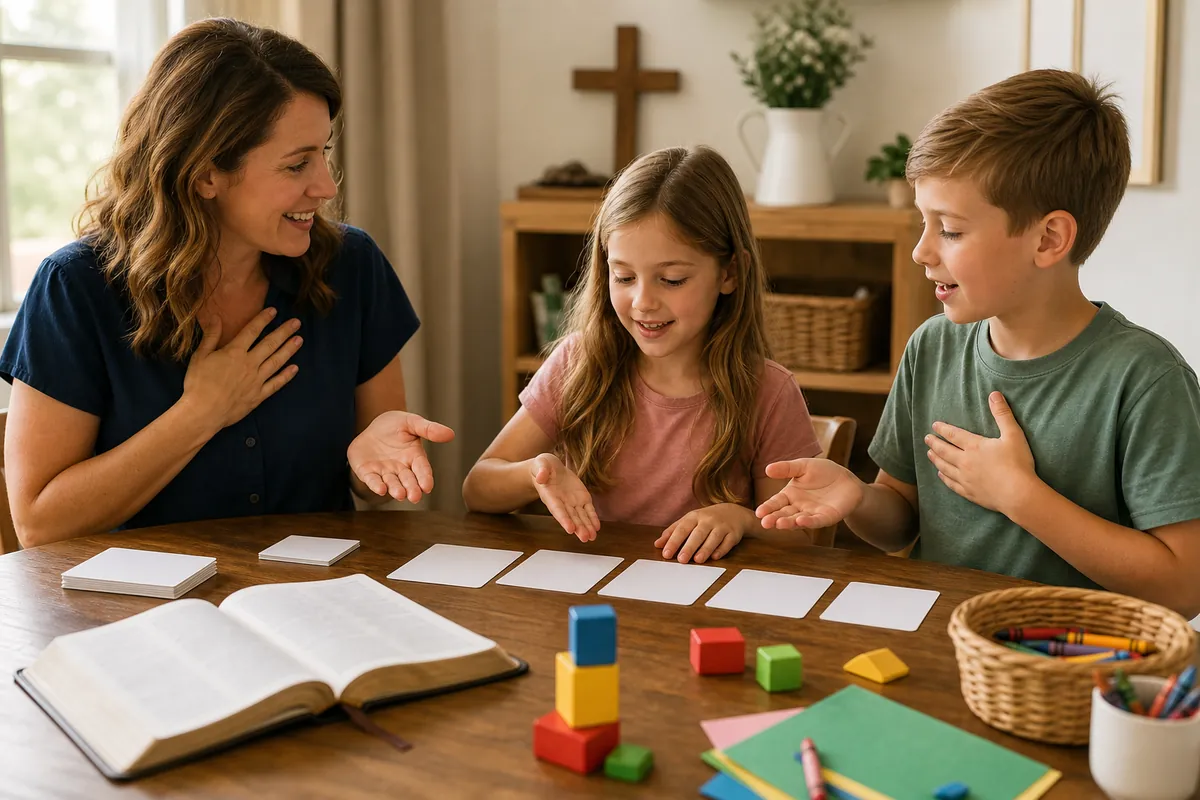
- Act it out. Use dolls, toy figures, or siblings to play through a scenario — someone falls down, someone forgets to share, someone is left out.
- Repeat the verse together before bed or at the table for a few days, so it sticks to the moment, not just the memory.
Kids this age respond well to a short phrase they can say back to a friend, like "I'm your friend even when you're sad."
How do I teach older kids and tweens about friendship?
Tweens are navigating real friendship challenges — exclusion, gossip, peer pressure, loyalty tests. Scripture speaks directly into this, but it works better as a conversation than a lecture.
Use these verses as discussion starters rather than answers to memorize cold:
- Proverbs 13:20 — "Whoever walks with the wise becomes wise, but the companion of fools will suffer harm." Ask: What kind of person do you want to become? Who's helping you get there?
- Philippians 2:3-4 — "Do nothing from selfishness... but with humility count others more significant than yourselves." Ask: What does it look like to put a friend's needs ahead of your own, without being a pushover?
- Ecclesiastes 4:9-10 — "Two are better than one... if one falls down, his friend can help him up." Ask: Who has helped you up before? Who could you help this week?
Older kids also need permission to let go of friendships that are consistently unkind. Proverbs 12:26 notes that "the righteous chooses his friends carefully." That is not about being exclusive — it is about being wise.
How can I handle friendship conflict with Scripture?
Conflict is where friendship character actually gets built. Kids need specific words for apologizing and forgiving, not just the instruction to "be nice."
A few verses give kids a script:
- Ephesians 4:32 — "Be kind to one another, tenderhearted, forgiving one another, as God in Christ forgave you."
- Matthew 5:9 — "Blessed are the peacemakers."
- Colossians 3:13 — "Bear with one another, and, if one has a complaint against another, forgive each other."
When a conflict happens, walk through it together:
- What happened, in one or two sentences?
- What would a kind response look like right now?
- What's one specific thing you can say to make it right?
If forgiveness feels especially hard for your child, our post on how to teach kids to forgive goes deeper into that specific struggle.

What are simple activities to practice being a good friend?
Verses stick better when they are connected to action. These ideas work at home, in a classroom, or around the dinner table.
- Encouragement notes. Have kids write one kind, true sentence to a sibling or friend. Tie it to 1 Thessalonians 5:11.
- "Who needs help today?" Each morning, ask who in their class or family might need a friend that day — and what that could look like.
- Friendship role-play. Practice saying sorry, saying thank you, and including someone who's left out. Kids rehearse better than they improvise.
- Verse-and-action pairing. Write a verse on one card and a friendship action on another. Match them up as a quick game.
If your child enjoys memory work in general, how to teach kids to memorize Bible verses has methods that pair well with the verses above.
How do I keep this going at home?
Friendship character is not a one-lesson topic. It needs repetition and real conversation as situations come up — which they will, often.
For families or small groups who want something more structured, the Kids Devotional: Real Friends — 33 Daily Friendship Devotions walks tweens through daily, Bible-based reflection on what it means to be a good friend. It is built for kids ages 8-13 to work through on their own or alongside a parent.
You can browse more printable resources in the shop if you are looking for something to pair with a specific age or season.
Friendship is one of the clearest places kids can live out their faith — not someday, but this week, with the people already in front of them.
Frequently asked questions
- What is the best Bible verse about friendship for kids?
- Proverbs 17:17, 'A friend loves at all times,' is the easiest one for young children to understand and remember because it is short and uses a word they already know.
- How do I teach a young child to be a good friend using the Bible?
- Pick one verse, act it out with a simple scenario like sharing a toy or saying sorry, and repeat it over a few days so the idea connects to real moments, not just a lesson.
- What does the Bible say about choosing good friends?
- Proverbs 13:20 says whoever walks with the wise becomes wise, and 1 Corinthians 15:33 warns that bad company corrupts good character, so Scripture encourages kids to be thoughtful about who they spend time with.
- How can I help my child who struggles to make or keep friends?
- Focus less on being popular and more on being kind, patient, and a good listener; those traits, modeled in verses like Philippians 2:3-4, build real friendships over time even for shy or anxious kids.
- friendship
- character building
- bible verses for kids
- sunday school
- kids devotional
Related reading
- How to Explain the Trinity to Kids (Without Confusing Them)Learn how to explain the Trinity to kids with simple, accurate words and examples that avoid confusing analogies and stay close to Scripture.
- Teaching Kids the Names of God: A Simple Starter ListA simple starter list of names of God for kids, with easy meanings and ways to teach each one at home or in Sunday school.
- Christmas Bible Activities for Kids: 9 Ideas for Home and Sunday SchoolChristmas Bible activities for kids that keep Jesus at the center: nine simple printable ideas for home, homeschool and Sunday school, from Advent pages to Nativity games.