November 9, 2026 · 7-min read
How to Explain the Easter Story to Kids (Without Scaring Them)
You can tell the whole Easter story, cross and all, and still have your kids fall asleep peaceful that night.
Yes, you can explain the Easter story to young kids honestly, including the cross, without traumatizing them. The key is telling the truth simply, keeping the focus on love, and always landing on the empty tomb.
Parents and teachers often freeze up here. The crucifixion is violent. The stakes are eternal. It is tempting to skip straight to bunnies and jellybeans. But kids are more resilient than we give them credit for, and they can handle hard truths when they are told with warmth and a clear ending.
What should the Easter story include for kids?
You do not need every detail from all four Gospels. You need the shape of the story, told in order, with the right emotional weight on each part.
A solid version includes:
- Jesus loved people and told the truth, which made some leaders angry
- He was arrested, put on trial, and sentenced to die on a cross
- He died and was buried in a tomb
- Three days later, he came back to life
- His friends saw him alive and knew he had beaten death
That is the whole arc. Everything else is seasoning. If your child only remembers one sentence, aim for: "Jesus died for us, but he did not stay dead."
How do I tell the crucifixion part without scaring them?
Name it honestly, but do not linger on the violence. You can say something like: "Some people who did not like what Jesus was teaching had him killed. It was very sad and very unfair, because Jesus had never done anything wrong."
A few things that help:
- Use the word "died," not graphic verbs
- Keep your own tone calm and steady, not hushed or dramatic
- Let your child ask follow-up questions rather than volunteering extra detail
- Pause after the hard part before moving to burial, so it does not feel rushed
If your child gets upset, that is not a sign you did it wrong. It means they are paying attention. Sit with the sadness for a minute before moving toward the hope.
Why did Jesus have to die, in simple terms?
This is the question that trips up most adults, because we want to give the full theological answer. Kids do not need that yet.
Try this: "Everyone does things that are wrong sometimes, and that breaks our friendship with God. Jesus loved us so much that he took the punishment for us, so we could be close to God again."
That is accurate and age-appropriate. You can build on it every year as your child grows. There is no need to front-load every nuance of atonement theology into a five-year-old's bedtime conversation.
If your child asks why God could not have just forgiven everyone without the cross, a gentle "that's a really good question, people have wondered about that for a long time" is a fine answer. You are allowed to not have the full answer on the spot.
How do I explain the resurrection so it feels real?
The resurrection is the good news, and kids usually love this part once they get there. Build anticipation instead of rushing it.
Try something like: "On the third day, some women went to the tomb to visit Jesus's body. But the stone was rolled away, and the tomb was empty. Jesus was alive. He had beaten death."
Ask your child what they think the women felt in that moment. Let them sit in the surprise and joy, the same way the disciples did. This is where you can let your voice get lighter and more excited, after keeping it steady through the sad parts.
Matthew's Gospel describes the angel's words simply: "He is not here, for he has risen, as he said." That single line works well as a memory verse for kids, short enough to stick and big enough to carry the whole story.
What questions will kids ask, and how do I answer them?
Expect some version of these:
- Did it really hurt? Yes, it was very painful, and that is part of why it was such a loving thing to do.
- Why didn't God stop it? God had a plan bigger than that moment, even though it looked like the worst thing that could happen.
- Is Jesus still alive now? Yes, he is alive in heaven, and that is why Easter is still something we celebrate.
- Will I die too? Yes, someday, but because of Jesus, death is not the end of the story for people who trust him.
You do not need a perfect script for every question. Honest, short answers beat long, nervous ones every time.

What activities help the story stick?
Hands-on retelling helps kids process the story without just absorbing words.
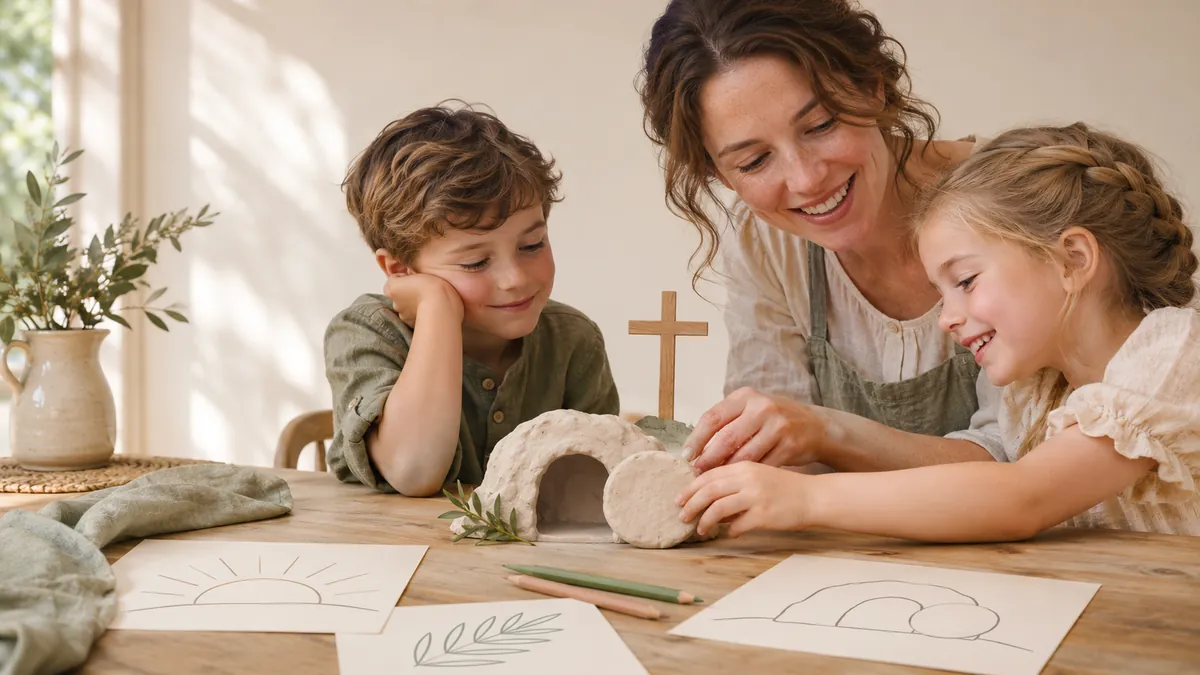
- Empty tomb craft: roll a stone away from a small cave made of paper or clay
- Resurrection eggs: fill plastic eggs with small symbols from the story, one per day leading up to Easter
- Retelling with a picture book: let your child narrate the pictures back to you in their own words
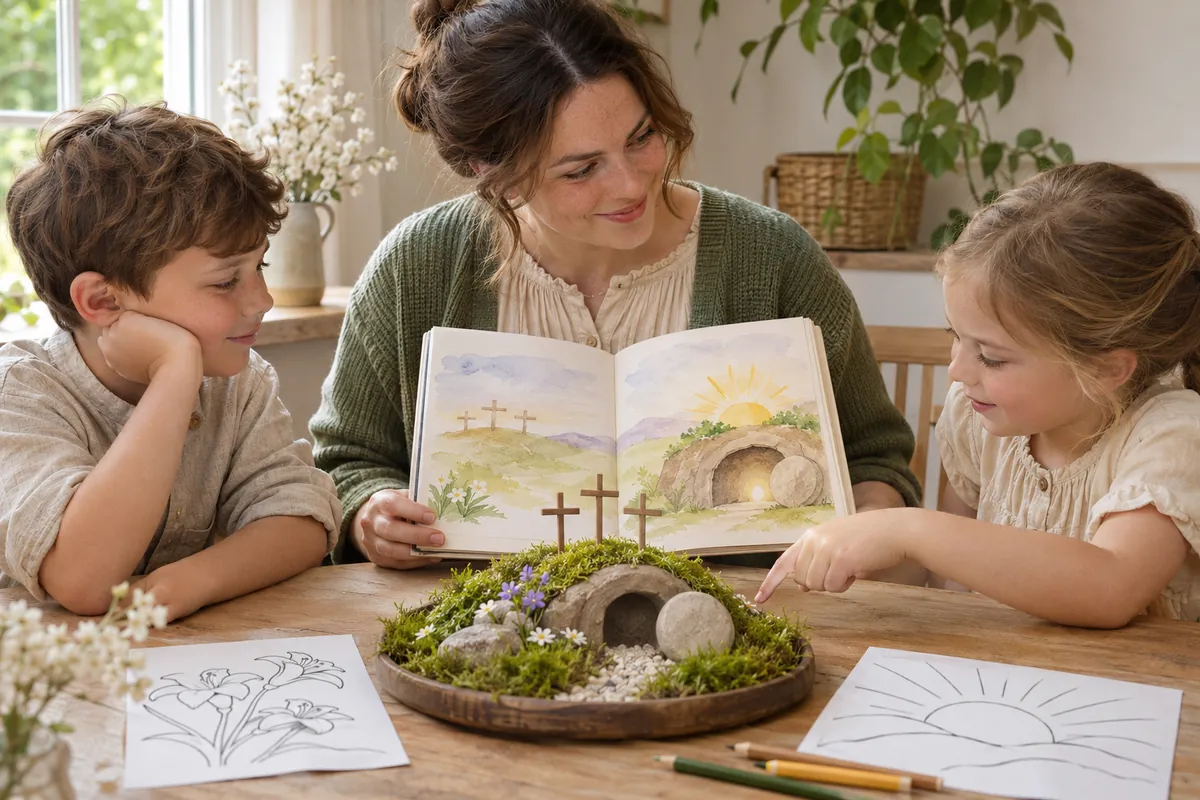
- Easter garden: build a small moss garden with a tomb and stone, something you can leave out all week as a visual reminder
If your child already struggles to sit still for Bible stories in general, it might help to read our post on what to do when a kid says Bible stories are boring for some ideas that transfer well to Holy Week too.
How do I connect Easter to everyday faith?
Easter is not just a once-a-year story. It connects to things kids already wonder about, like why bad things happen and whether God is still in control.
If your child has asked hard questions about suffering before, our post on why bad things happen to good people pairs naturally with the Easter conversation, since the cross is the clearest example of something terrible being turned into something good.
You can also tie Easter into communion if your church practices it with kids, since both point to the same sacrifice. Our guide on explaining communion to kids covers that connection in simple terms.
A simple way to help it stick after the story
If you are leading a Sunday school class or a family devotion and want something for kids to hold onto after the story is told, a simple worksheet can help. The Kids Easter Sermon Notes Worksheet gives children a place to draw and write down what they heard, which helps the story move from "something I listened to" into "something I remember."
It is a small, practical tool, nothing more. The story itself does the real work. For more printable resources across other topics, you can browse the full shop whenever it is useful.
Telling the Easter story well is not about getting every word right. It is about telling the truth gently, staying steady through the hard part, and letting the joy of the empty tomb land the way it is meant to.
Frequently asked questions
- What age is okay to tell kids about the crucifixion?
- Most kids can handle a simple, honest version by age 4 or 5, as long as you keep the focus on love and the happy ending. Adjust the detail level, not the truth, as they grow.
- How do I explain why Jesus had to die?
- Keep it simple: our sin separated us from God, and Jesus took the punishment so we could be close to him again. You do not need to explain every theological layer to a young child for this to be true and meaningful.
- Is it okay to skip the crucifixion and just talk about the resurrection?
- The resurrection only means something because of the cross, so it is better to include both, even briefly, than to skip to the ending. You can soften the details without removing the event.
- What if my child asks if it hurt?
- Answer honestly but gently, something like yes, it was very painful, and that is part of why what Jesus did was so loving. Avoid graphic description and let the conversation move toward the empty tomb.
- How do I handle Easter bunnies and eggs alongside the Bible story?
- You do not have to choose one or the other. Many families enjoy baskets and egg hunts as fun traditions while keeping the resurrection as the actual reason for the day.
- easter
- bible stories
- holy week
- kids church
- homeschool
- sunday school
Related reading
- How to Explain the Trinity to Kids (Without Confusing Them)Learn how to explain the Trinity to kids with simple, accurate words and examples that avoid confusing analogies and stay close to Scripture.
- How to Teach Kids to Be a Good Friend (With Bible Verses)Bible verses about being a good friend for kids, plus simple ways to teach loyalty, kindness, and forgiveness at home or in Sunday school.
- Teaching Kids the Names of God: A Simple Starter ListA simple starter list of names of God for kids, with easy meanings and ways to teach each one at home or in Sunday school.