November 11, 2026 · 7-min read
How to Teach Kids Their Identity in Christ (Simple Ideas)
What your child believes about who they are will shape everything else they believe. Here's how to anchor that belief in Scripture.

Teaching kids their identity in Christ means helping them know, in words they can repeat, that God made them, knows them by name, and loves them apart from how they perform or compare to others. The clearest way to do this is through a few short, memorable Bible truths repeated often, not a long explanation given once.
Kids hear a lot of competing messages about who they are. A comment on the playground, a comparison to a sibling, a bad grade, a missed goal in a game. Left unanswered, those moments start writing the story of how a child sees themselves. Scripture gives you a better story to put in front of them, early and often.
Why does identity in Christ matter so much for kids?
Kids are still forming their sense of self, and they're forming it from whatever voice is loudest. If the loudest voice is comparison, criticism, or performance, that becomes the foundation they build on.
Grounding them in what God says instead gives them something steadier.
- A child who knows God made them on purpose handles "you're weird" differently than one who doesn't.
- A child who knows God calls them His own has a place to stand when friendships shift.
- A child who knows their worth isn't earned can fail a test without feeling like a failure.
This isn't about raising confident kids for confidence's sake. It's about anchoring them in something true before the world hands them something false.
What Bible truths should I start with?
Keep it to a short list a child can actually hold onto. Pick two or three, not ten.
- God made me on purpose — Genesis 1:27, Psalm 139:13-14
- God knows my name and calls me His own — Isaiah 43:1, Jeremiah 1:5
- God loves me because I'm His, not because I'm good at things — 1 John 3:1
- God made me to do good things, and planned them ahead of time — Ephesians 2:10
- Nothing can separate me from God's love — Romans 8:38-39
You don't need to teach all five in one sitting. One verse, well-planted, outlasts five verses skimmed.
How do I explain this to a young child?
Young kids need short phrases, not theology. Try language like this:
- "God made you, and He doesn't make mistakes."
- "You don't have to earn God's love. You already have it."
- "God knows your name. You're not just a face in the crowd to Him."
Say these phrases often, in ordinary moments. Bedtime, car rides, after a hard day at school. Repetition does more work here than a single big conversation ever will.

How do I respond to comparison or put-downs?
When a child says "I'm not as good as my brother" or comes home upset about a comment at school, resist the urge to argue them out of the feeling right away.
Try this instead:
- Name what happened. "Sounds like that really stung."
- Let them feel it. Don't rush to fix it in the first thirty seconds.
- Offer one true thing. "God made you exactly the way He wanted. You're not a copy of anyone."
- Repeat it over time. One conversation won't undo months of comparison. Dozens of small ones will.
The goal isn't to win the argument in the moment. It's to give them a true phrase they'll eventually reach for on their own.
What activities help this truth stick?
Kids remember what they do more than what they're told. A few ideas that work at home, in Sunday school, or kids church:
- Name meaning activity. Look up what a child's name means, then connect it to a verse about God knowing them by name.
- Mirror verse. Tape a verse like Psalm 139:14 to a bathroom mirror so it's read every morning.
- Identity cards. Write one truth per card ("God made me," "God calls me His own") and let kids pick one to carry in a pocket or backpack.
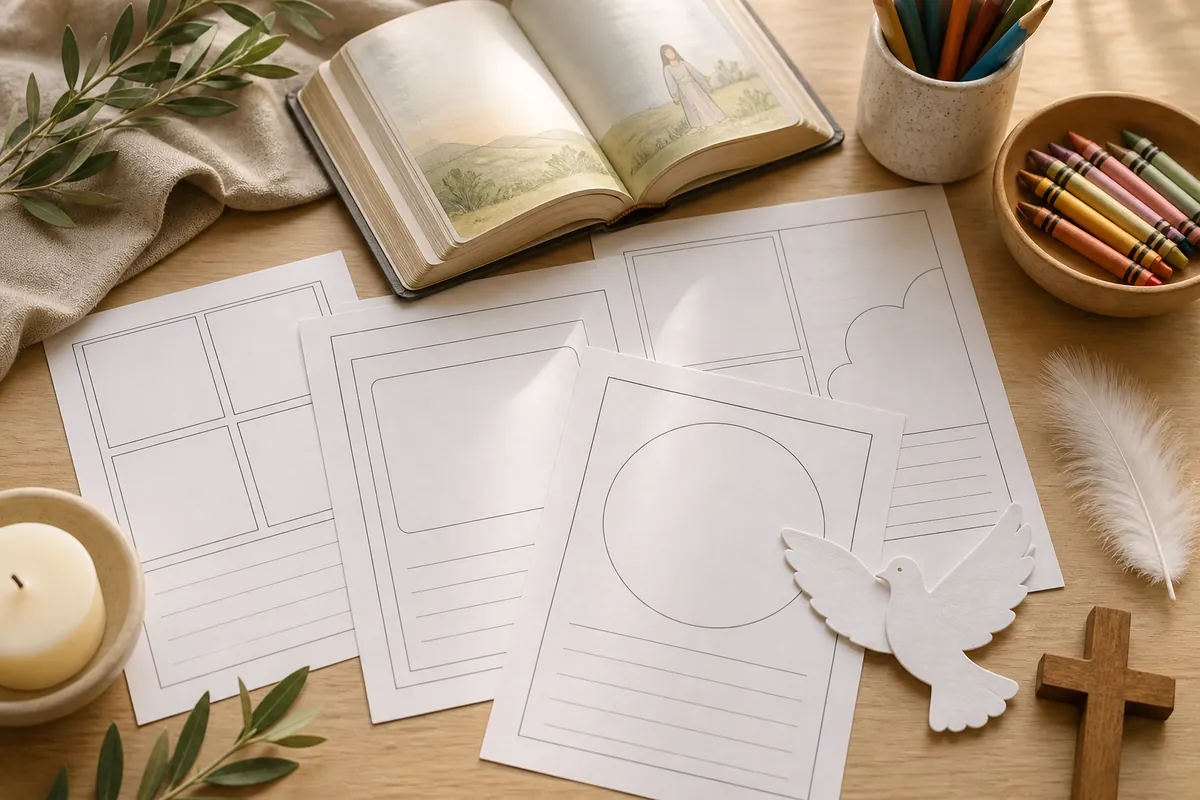
- Coloring and craft time. Pairing a verse with something to color or make gives the truth a few extra minutes to sink in, especially for younger kids who need something to do with their hands while they listen.
If you're also working on helping kids build a habit of gratitude alongside this, how to teach kids gratitude from the Bible pairs well, since a thankful heart and a secure identity tend to grow together.
How do I keep this going long term?
A single lesson on identity in Christ won't hold up against years of comparison messages. This needs to be a slow, steady drumbeat.
- Revisit the same few verses across months, not just once.
- Notice when a comparison moment happens and use it as a teaching opportunity, not a lecture opportunity.
- Let older kids ask hard questions ("but what if I'm not good at anything?") without rushing to shut the question down.
- Keep the tone warm. This truth should feel like good news, not another rule to live up to.
If memorizing verses feels hard to sustain, how to teach kids to memorize Bible verses has some practical ways to make the handful of verses above actually stick.
For a quiet, hands-on way to reinforce these same truths at home, the God Knows Your Name Affirmations Coloring Book walks through Scripture-based identity statements one page at a time, which some families use as a slow bedtime habit rather than a one-time lesson. You can see more resources like it in the shop if you're looking for something to pair with family devotion time.
What a child believes about who they are will shape almost everything else they believe. Give them a few true, repeatable words from Scripture, and keep saying them. That's the work, and it's worth doing slowly.
Frequently asked questions
- What does identity in Christ mean for a child?
- It means a child's worth and belonging come from being made and loved by God, not from how they perform, look, or compare to others. Verses like Genesis 1:27 and 1 John 3:1 give children simple, repeatable truth to stand on.
- At what age should I start teaching this?
- You can start as early as a child can talk, using very simple phrases like 'God made you and God loves you.' Add more depth as they grow and start facing comparison, friendship struggles, or bullying.
- How do I help my child when they feel left out or compared to a sibling?
- Name the feeling, then gently redirect to a specific truth about who God says they are, rather than arguing them out of the feeling. Over time this becomes their own go-to response.
- What Bible verses are good for teaching kids their identity in Christ?
- Genesis 1:27, Psalm 139:13-14, Jeremiah 1:5, 1 John 3:1, and Ephesians 2:10 are all short enough for kids to memorize and specific enough to speak to real insecurity.
- Can this be taught in a classroom or kids-church setting, not just at home?
- Yes. Short, repeatable phrases and one verse per week work well in Sunday school or kids church, especially when paired with a simple craft or coloring activity that reinforces the truth.
- identity in christ
- kids ministry
- bible lessons for kids
- self-worth
- sunday school
- family devotions
Related reading
- How to Explain the Trinity to Kids (Without Confusing Them)Learn how to explain the Trinity to kids with simple, accurate words and examples that avoid confusing analogies and stay close to Scripture.
- How to Teach Kids to Be a Good Friend (With Bible Verses)Bible verses about being a good friend for kids, plus simple ways to teach loyalty, kindness, and forgiveness at home or in Sunday school.
- Journey to Bethlehem: A Christmas Bible Map for KidsFollow the journey to Bethlehem in eight stops, from Nazareth to Egypt and home, with Bible verses and a simple family activity for each stop.