August 26, 2026 · 6-min read
How to Write Prayer Requests Kids Will Actually Remember
Most kids forget what they prayed for by dinnertime. A little structure changes that.
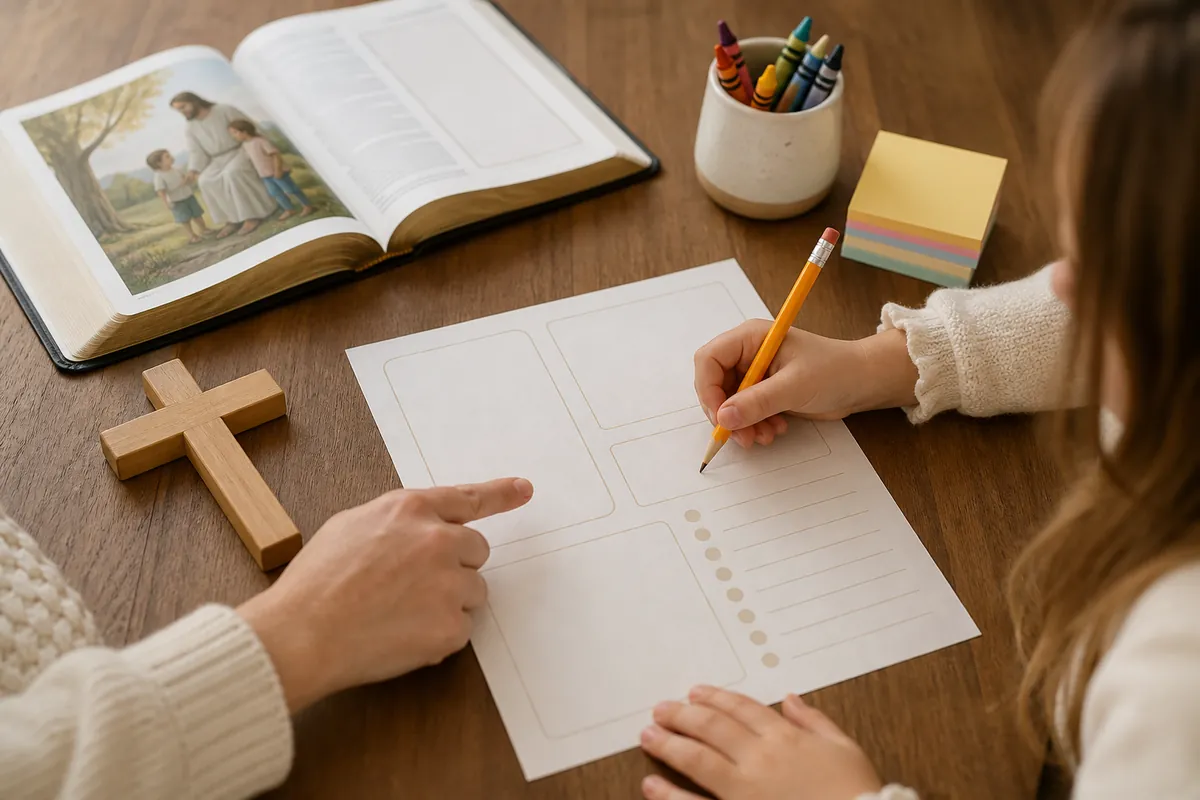
Write a prayer request for kids the same way you would write a note to a friend: one specific thing, in the child's own words, with space to write down what happened. That's the whole format. The trick isn't getting kids to pray. It's giving them a place to put the prayer so it doesn't disappear the moment they say "amen."
Why do kids forget what they prayed for?
Kids pray about real things. A spelling test. A friend who moved away. Grandma's knee. But if the prayer only exists in the air, it's gone in an hour.
Writing it down does two things a spoken prayer can't:
- It makes the request feel important enough to keep.
- It gives you both a reason to circle back later.
That second part is where the real growth happens. A child who prays for something and then sees, in their own handwriting, that it happened, starts to trust that prayer isn't just a ritual. It's a conversation.
What should a kid's prayer request actually include?
Keep it short. A prayer request for a child needs four things, no more:
- Who or what it's for — a name, not a category. "My friend Ellie" beats "my friends."
- What's actually happening — one sentence, in their words.
- What they're asking God for — specific if possible. "That her arm heals" instead of "that she's okay."
- Space to write the answer later — even just a line that says "What happened?"
That's it. Resist the urge to add reflection questions or Scripture fill-in-the-blanks for younger kids. The simpler the format, the more likely they'll actually use it without an adult pushing them through it.

How do I help a child follow up on answered prayers?
This is the step most families and classrooms skip, and it's the one that makes the whole thing worth doing.
Set a regular time to look back, not just forward. Sunday dinner, the start of Monday's devotion, the first five minutes of Sunday school — anywhere that already exists in your rhythm works.
Ask two questions:
- "What did we pray for last week?"
- "What happened?"
Let kids answer in their own words, even if the answer is "nothing yet" or "not what I asked for." Psalm 34:4 says, "I sought the Lord, and he answered me and delivered me from all my fears." Kids need to see that pattern play out in their own lives, not just hear it read from a Bible story about someone else.
If a request is still open after a few weeks, that's fine. Move it forward instead of dropping it. "We're still praying for Grandma's knee" teaches patience without anyone having to explain the word.
What's a simple format I can copy today?
If you want something to hand a child right now, this works on any scrap of paper or index card:
I'm praying for: ______________________ What's going on: ______________________ What I'm asking God: ______________________ What happened: ______________________ (fill in later)
For a classroom or family devotion setting, keep a small stack of these on hand rather than one shared notebook. Kids are more likely to write honestly when the request is theirs alone, not something siblings or classmates will read.
If your family already does a regular devotion time, this fits naturally into the routine described in how to start family devotions — prayer requests are a good anchor point when you're not sure what to do each night.
Does this work for Sunday school and kids church too?
Yes, and it solves a specific problem group settings have: kids forget requests between weeks because there's no shared record.
A few ways to adapt it for a class:
- Give each child their own card or half-sheet rather than a shared prayer journal.
- Collect them at the end of class and hand them back the following week, so the child sees their own request again before praying about it a second time.
- Read a few out loud (with permission) so kids learn to pray for each other, not just themselves.
Volunteers running a rotating schedule benefit the most from this, since it removes the pressure to remember every child's situation from memory. The card does that job instead.
A simple next step
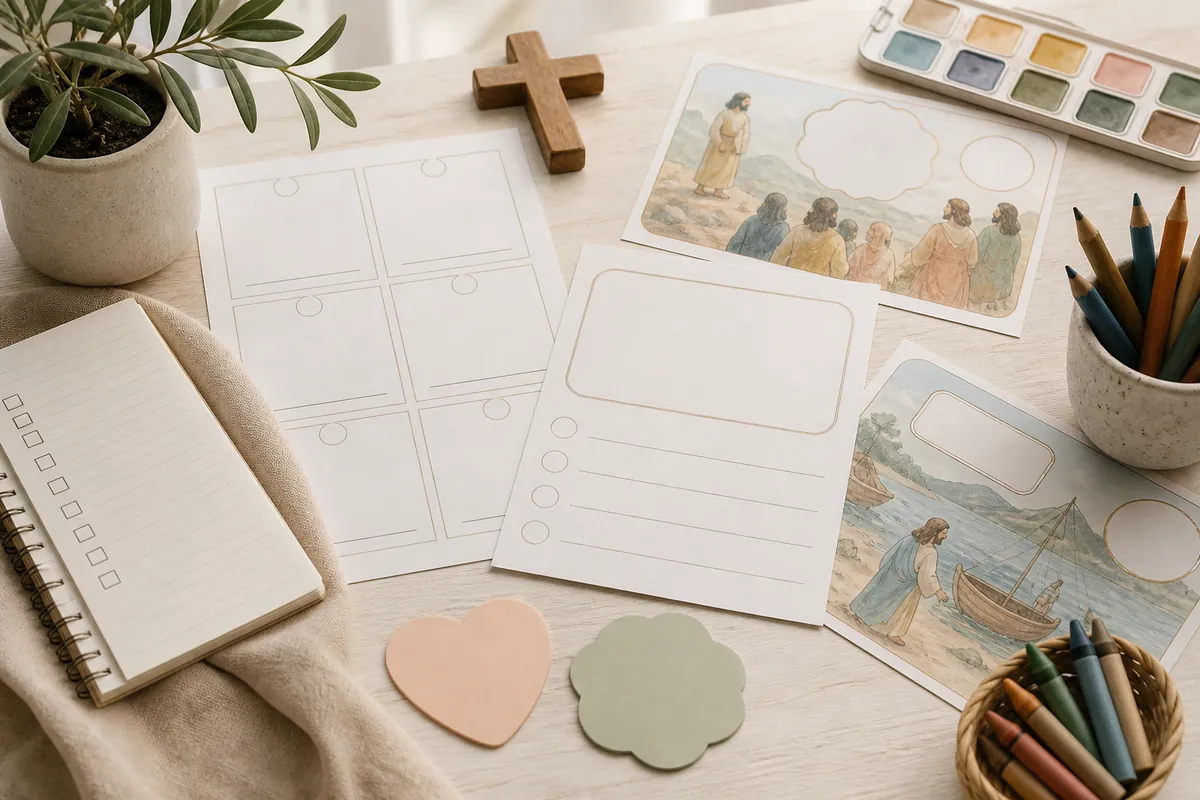
If you'd rather not reinvent this every week, the Kids Prayer Worksheet is a printable built around this exact format — a spot for the request, the ask, and the follow-up, sized for home or classroom use. It's a small tool, not a replacement for the conversation, but it saves you from hunting for paper on a Sunday morning.
You'll find more printables like it, along with other Bible-based activities, over in the shop.
Whatever format you land on, the goal stays the same: help a child see prayer as something real enough to write down, and important enough to check back on.
Frequently asked questions
- What is a good prayer request for a child to write?
- Something specific and personal works best, like naming a friend who is sick or a test they are nervous about, rather than a general request like 'help everyone.' Specific requests are easier to remember and easier to notice when they are answered.
- How often should kids write down prayer requests?
- Once a week is plenty for most families and classrooms. A weekly rhythm, like Sunday night or the start of a Sunday school class, keeps it manageable and gives you a natural time to check back on older requests.
- Should young kids write their own prayer requests or dictate them?
- Either is fine. Kids who cannot write yet can dictate while an adult writes the words down, using the child's own language rather than adult phrasing. What matters is that the request is theirs, not how neat the handwriting is.
- How do I teach kids that God does not always answer prayer the way they want?
- Keep a record of past requests and talk honestly about the ones that were answered differently than expected, alongside the ones that were not. Seeing the full pattern over time teaches kids that God is still good even when the answer is no or not yet.
- prayer
- kids prayer
- family devotions
- sunday school
- prayer journal
Related reading
- How to Teach Kids to Read the Bible for ThemselvesLearn how to teach kids to read the Bible with simple, Scripture-first steps that build confidence and understanding.
- How to Teach Kids the Creation Story in 7 Simple DaysLearn how to teach kids the creation story with seven simple, Scripture-first lessons from Genesis 1 for home, class, or church.
- How to Teach Kids to Confess Sin Without Shaming ThemLearn how to teach kids about confession without shame using simple words, calm tone, and Scripture that points straight to forgiveness, not fear.