September 2, 2026 · 6-min read
How to Teach Kids to Memorize Bible Verses (That Actually Stick)
Your kid can recite it perfectly on Sunday and forget it by Wednesday. Here's how to make a verse actually stay.
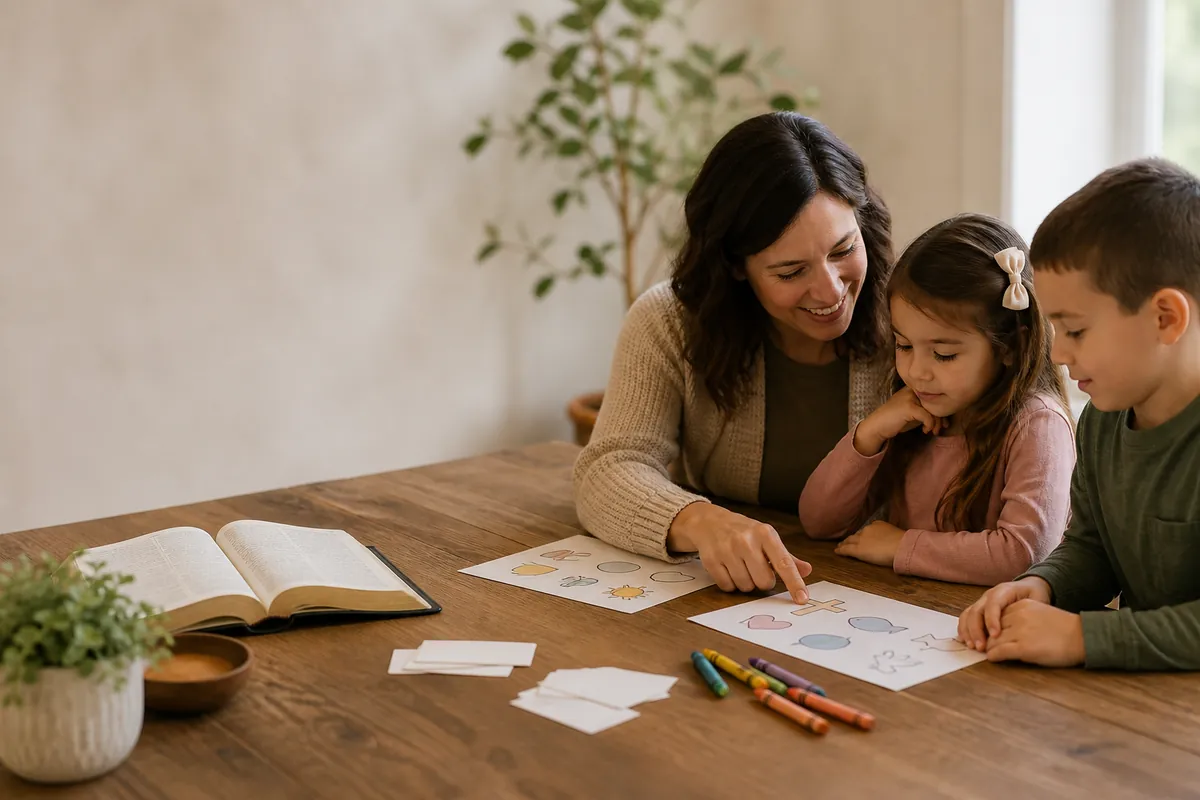
Kids memorize Bible verses best through short daily repetition, a hand motion or rhythm to anchor the words, and low-pressure review spread across the week — not one big push to get it perfect. The verse has to move from their ears into their body before it sticks in their memory.
If you've ever had a child nail a verse on Sunday and draw a blank by Wednesday, you're not doing anything wrong. That's just how memory works for young kids. The fix isn't more effort — it's a better rhythm.
What makes a verse actually stick in a kid's memory?
Kids remember what they touch, move, and repeat — not just what they hear once. A verse said aloud one time in class rarely survives the week.
Three things make memory stick:
- Repetition spread over days, not crammed into one sitting
- A physical anchor — hand motions, a tune, or clapping the rhythm
- Real-life connection — using the verse in an actual moment, not just reciting it
If you only have time for one change, add repetition across several short moments instead of one long one. Five minutes a day beats thirty minutes once a week almost every time.
How many verses should a young child learn at once?
One. Just one, until it's solid.
Kids under seven especially do better with a single verse held for a week or two than three verses rotating at once. Adding a second verse before the first is truly comfortable usually means both get shaky.
A simple pace that works for most families and classrooms:
- Introduce the verse Monday, phrase by phrase
- Repeat it daily, 2-3 times a day, for one week
- Review it lightly for another week while nothing new is added
- Move to the next verse once the old one comes without prompting
What's a simple weekly method for verse memorization?
Break the verse into short phrases and add them one at a time rather than handing over the whole thing at once.
For a verse like John 3:16, that might look like:
- Day 1: "For God so loved the world"
- Day 2: add "that he gave his one and only Son"
- Day 3: add "that whoever believes in him"
- Day 4: add "shall not perish but have eternal life"
- Day 5: say the whole verse together, no prompting
This method works whether you're at the kitchen table, in a homeschool morning basket, or leading a room of eight-year-olds. It also pairs well with a family devotion rhythm — if you don't have one yet, how to start family devotions is a good place to begin.
How can hand motions or rhythm help?
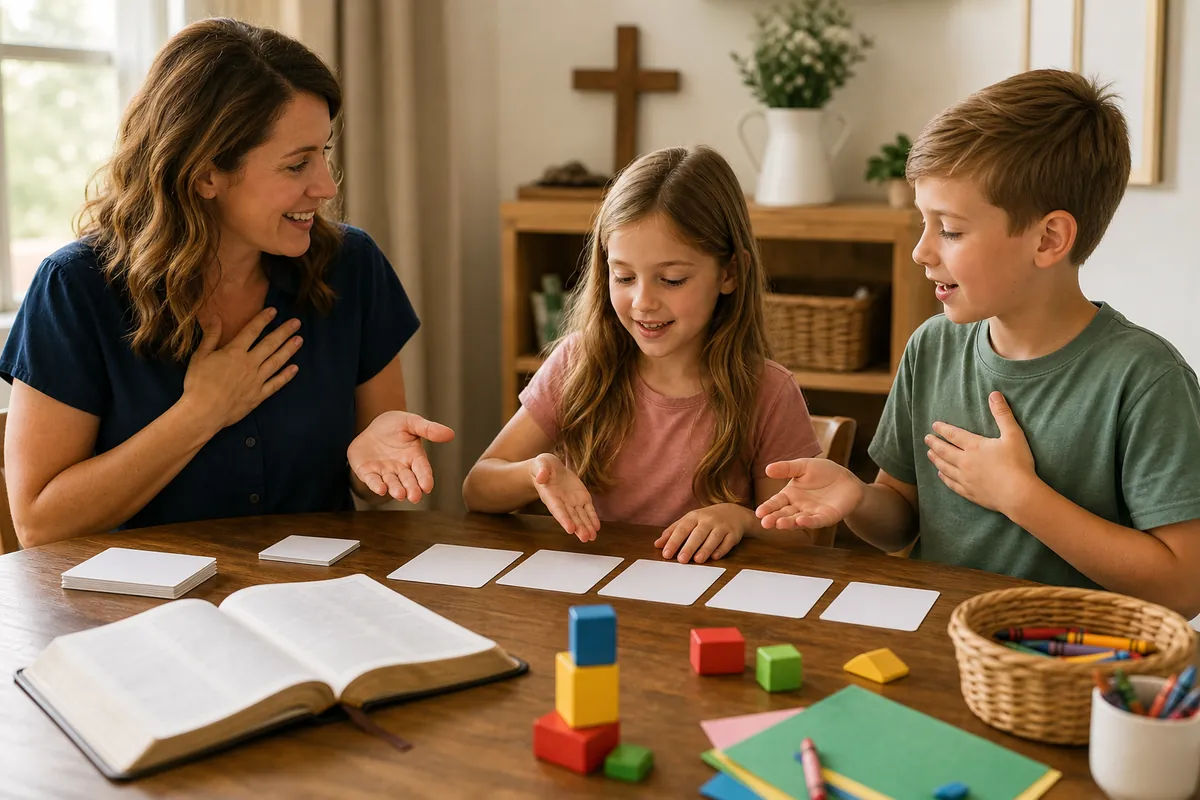
They give the words somewhere to live besides just memory. A lot of kids can perform a verse with motions before they can say it without them — and that's fine. The motions are a ladder, not a crutch.
A few ways to add a physical anchor:
- Assign one simple hand motion per phrase
- Clap or tap the rhythm as you say the verse together
- Set it to a familiar tune, even something as basic as "Happy Birthday"
- Whisper it, then shout it, then say it in a silly voice — variety keeps attention
None of this needs to be elaborate. A tired parent with two minutes before bedtime can still tap out a rhythm on the kitchen table.
What if my child keeps forgetting the verse?
Slow down and shrink the piece. If a full verse isn't sticking, drop back to one phrase and hold it there longer before adding more.
A few common snags and quick fixes:
- They mix up the order of phrases — say the verse together first, then let them try alone
- They lose interest after a few tries — switch how they say it (whisper, sing, act it out) instead of repeating the exact same way
- They can say it but don't seem to understand it — ask one simple question afterward, like what the verse means or when they could use it
Struggling to recall a verse isn't a sign a child isn't "getting it" spiritually. It's just memory doing what memory does at that age.

How do I review verses so kids don't forget them?
Bring old verses back on purpose, or they quietly disappear. A verse a child hasn't said in a month needs almost as much review as a brand-new one.
A light review system that doesn't take much planning:
- Keep a running list of verses your child has learned
- Once a week, pick one old verse to say together at dinner or bedtime
- Let your child pick the "verse of the day" sometimes — kids remember what they get to choose
- Revisit a verse when life actually calls for it, like reciting a verse about fear before a first day of school
This is also where a visual, hands-on activity can help a specific verse take root. Tracing and coloring a verse while saying it out loud gives kids one more way to absorb the words — our John 14:6 trace and color worksheet was made for exactly that kind of quiet, repeatable practice, and you'll find more Scripture memory activities in the shop if you're building out a rotation.
Which Bible verses are good for kids to start with?
Start with short, concrete verses that mean something in daily life rather than long or abstract ones.
A few reliable starting points:
- "God is love." — 1 John 4:8
- "Be kind to one another." — Ephesians 4:32
- "I can do all things through him who strengthens me." — Philippians 4:13
- "Trust in the Lord with all your heart." — Proverbs 3:5
- "Let the children come to me." — Matthew 19:14
Once a few short verses are solid, longer ones — and the ideas behind them, like the armor of God — become much easier to build on. The goal was never a perfect recitation. It's a child who has a few true words ready in their heart when they actually need them.
Frequently asked questions
- What age should kids start memorizing Bible verses?
- Most kids can start around age two or three with very short phrases, like 'God is love.' By kindergarten they can usually handle a full short verse with support.
- How long should it take a child to memorize one verse?
- With five to ten minutes of daily repetition, most kids learn a short verse in about a week. Longer verses can take two to three weeks broken into phrases.
- Should kids memorize the reference along with the verse?
- Yes, but add it last. Let the child learn the words first, then attach the book, chapter, and verse once the phrase is already comfortable.
- Is it better to memorize one Bible translation or several?
- Stick with one translation, especially early on. Switching between versions makes recall harder and can blur the exact wording for young kids.
- What if my child memorizes a verse but doesn't understand it?
- That is normal and still worth doing. Ask one simple question after they recite it, like what it means or when they could use it, so understanding catches up over time.
- bible memory
- scripture memorization
- sunday school
- kids church
- family devotions
- homeschool bible
Related reading
- How to Teach Kids to Read the Bible for ThemselvesLearn how to teach kids to read the Bible with simple, Scripture-first steps that build confidence and understanding.
- How to Teach Kids the Creation Story in 7 Simple DaysLearn how to teach kids the creation story with seven simple, Scripture-first lessons from Genesis 1 for home, class, or church.
- How to Teach Kids to Confess Sin Without Shaming ThemLearn how to teach kids about confession without shame using simple words, calm tone, and Scripture that points straight to forgiveness, not fear.