August 31, 2026 · 7-min read
How to Explain Why Bad Things Happen to Good People to Kids
When life feels unfair, kids need honesty more than easy answers — here's how to give them both truth and comfort.
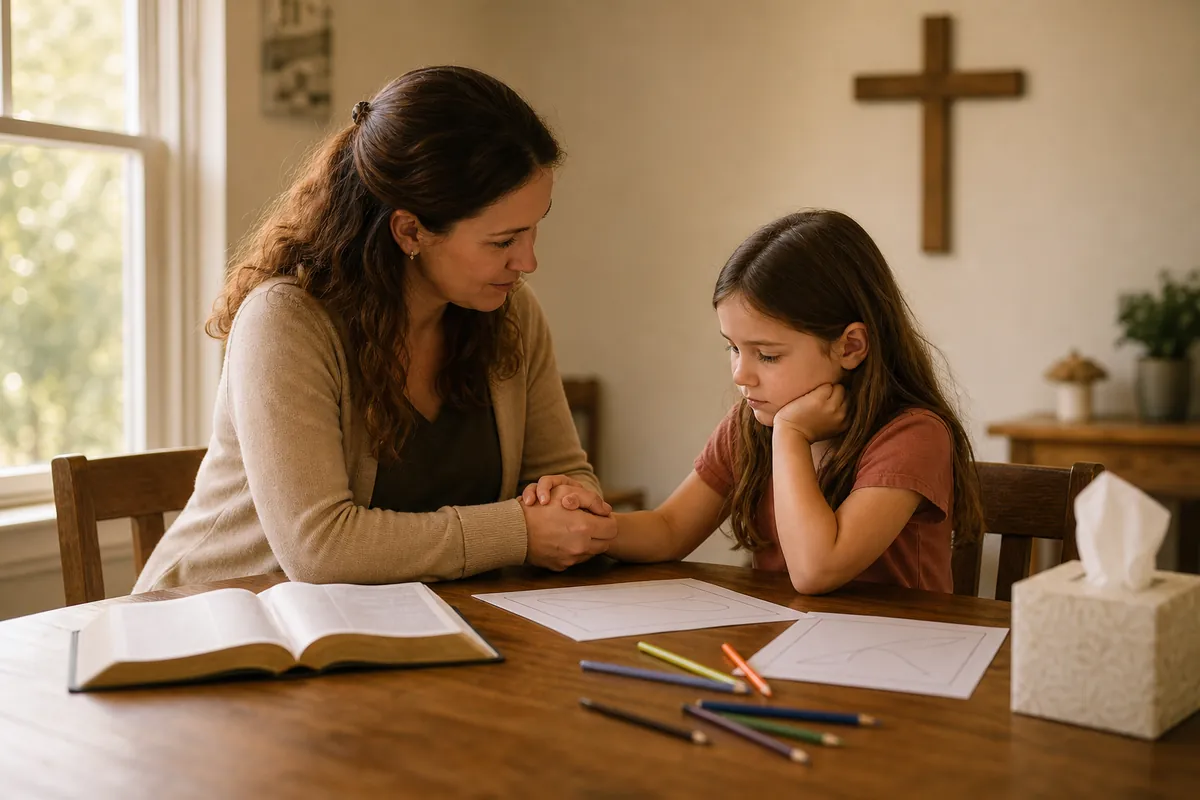
Bad things happen to good people because we live in a broken world, not because God is punishing anyone or has stopped loving them. That's the honest, short answer — and it's the one to lead with, before you explain anything else.
Kids don't ask this question in the abstract. They ask it after a diagnosis, a funeral, a natural disaster on the news, or a friend's parents splitting up. The moment is real, so the answer has to be real too — not a Sunday-school cliché that falls apart the next time something hard happens.
What should I say first when a child asks this?
Start by naming the feeling, not the theology. A child who just watched something unfair happen needs to know you see it too.
Try something like:
- "You're right, that isn't fair. It makes me sad too."
- "That's a really good question, and it's okay to feel upset about it."
- "I don't have a neat answer, but I want to talk about it with you."
This matters because kids are watching your face as much as they're listening to your words. If you rush to explain, they learn that hard feelings need to be fixed fast. If you sit with them first, they learn that God can handle their honest emotions — because He can. The Psalms are full of people telling God exactly how unfair life feels (Psalm 13:1-2).
Why do bad things happen if God is good?
The Bible doesn't dodge this question, and neither should you. A simple, age-appropriate framework:
- God made the world good. Genesis 1 describes a world without suffering.
- Sin broke it. Not any one person's specific sin causing any one specific tragedy — but humanity's rebellion introduced sickness, death, and unfairness into everything (Romans 8:22).
- God didn't leave us in it. He entered the brokenness Himself in Jesus, who wept at a friend's tomb (John 11:35) and suffered unjustly on the cross.
- He's still working, even now. Romans 8:28 says God works for good in all things — not that all things are good.
That last distinction is the one to repeat often. "God can bring good out of this" is true and comforting. "This bad thing is actually good" is not true, and kids can tell the difference even when adults can't.
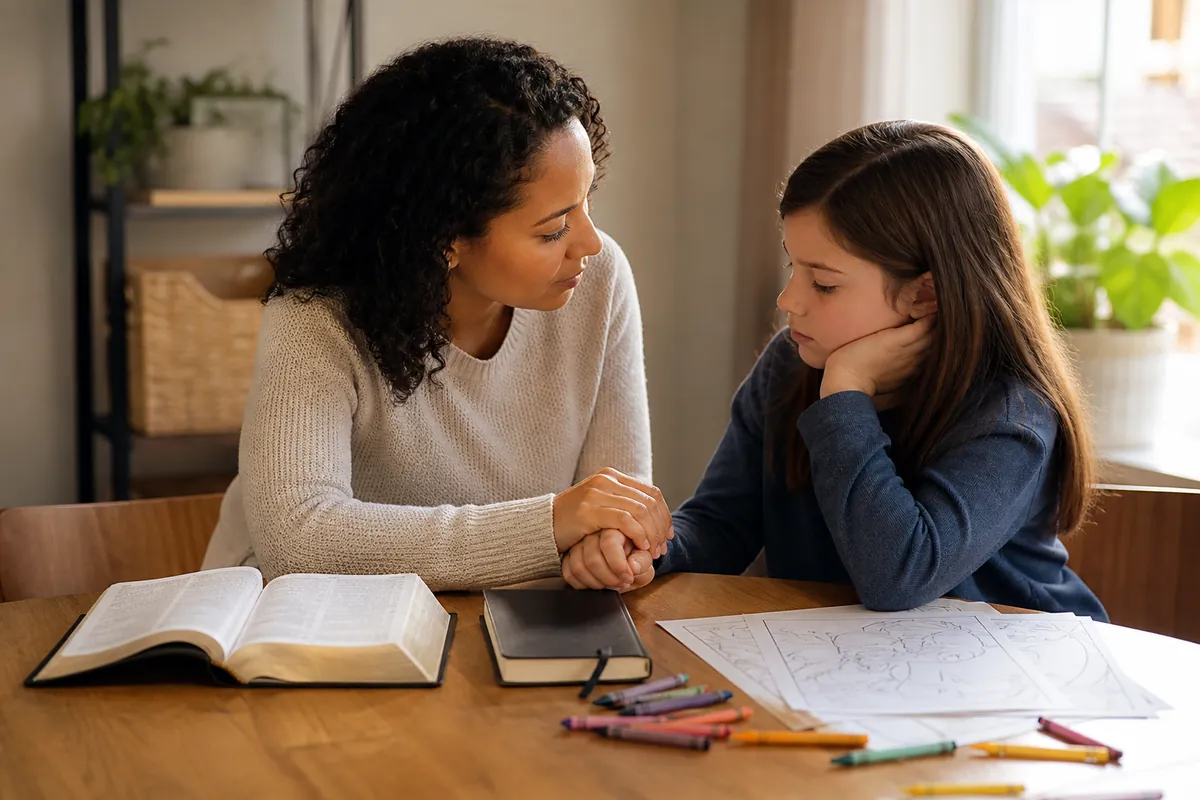
How do I answer without giving a pat answer?
Pat answers feel safe to say but rarely comfort anyone. Watch for these and swap them out:
- Instead of "It was God's plan," try "God didn't cause this, but He's with us in it."
- Instead of "Everything happens for a reason," try "Some things don't make sense right now, and that's okay to admit."
- Instead of "They're in a better place, so don't be sad," try "It's okay to be sad and still believe they're with God."
Kids remember the phrases we hand them, and they'll repeat them to other hurting people someday. Give them words that hold up under real weight.
What Bible story can I use to talk about unfair suffering?
Joseph is a strong starting point for kids around age seven and up. He was betrayed by his own brothers, sold into slavery, falsely accused, and forgotten in prison — none of it his fault. Years later he tells his brothers, "You intended to harm me, but God intended it for good" (Genesis 50:20).
Job works for older kids and teens who can handle a longer, harder story about a good man who suffers without a clear reason given to him — only God's presence and eventual restoration.
For younger children, keep it simpler: talk about how Jesus got tired, hungry, and sad too, so He understands exactly how they feel.
How do I keep my child from feeling scared or unsafe?
Big questions about suffering can tip into anxiety fast, especially after a scary news story or a health scare close to home. A few ways to keep the conversation grounded:
- Separate "this could happen somewhere" from "this is happening to us."
- Reassure them concretely: who is caring for them, what's true right now, what stays the same.
- Avoid vague reassurances like "nothing bad will ever happen to you" — kids sense when a promise isn't true, and it can undercut trust later.
- Remind them that God is described as close to the brokenhearted (Psalm 34:18), not distant from hard moments.

What if I don't know the answer myself?
Say so. "I don't know why this happened, but I know God hasn't left us" is a complete, faithful answer. Kids don't need you to have it all figured out — they need to see that not knowing doesn't shake your trust.
This is also a good moment to pray together instead of just talking. A short, honest prayer — "God, this is hard, help us feel You close" — teaches a child that prayer is for real pain, not just mealtime and bedtime routines. If your family or classroom is building that habit, our Kids Prayer Worksheet gives children simple, guided prompts for bringing hard feelings to God, which can be a gentle next step after a conversation like this one.
How do I keep the conversation going over time?
One talk rarely settles a big question like this. Kids revisit it as they grow, understand more, and face new losses.
- Check back in a few days later: "Have you been thinking more about what we talked about?"
- Let them ask the same question more than once — it usually means they're processing, not stuck.
- Keep modeling honest faith yourself, out loud, when you face hard things too.
If you're building a rhythm of these conversations at home, our post on starting family devotions has practical ways to open space for questions like this one regularly, and our piece on handling big questions about death covers a closely related topic in more depth. You can also browse more faith-building resources in the shop if you're looking for tools to support these conversations at home or in class.
Frequently asked questions
- Is it okay to tell a child I don't know why something bad happened?
- Yes. Saying 'I don't know, but God is still good and still with us' is more honest and more comforting than a made-up explanation, and it models faith that can hold uncertainty.
- Should I tell a child that bad things happen because of sin?
- Be careful with this one. Blanket statements like 'this happened because someone sinned' can make a hurting child feel punished or ashamed, so stick to the general truth that we live in a broken world rather than assigning blame to a specific person.
- What Bible story helps kids understand unfair suffering?
- The story of Joseph works well for many ages because it shows real injustice, a long wait, and an ending where God brings good from harm without ever saying the harm itself was good.
- How do I answer without scaring my child about their own safety?
- Acknowledge the feeling first, then gently separate 'this could happen' from 'this will happen to us,' and reassure them with concrete truths about who is caring for them right now.
- What age should I start talking about suffering with my kids?
- Most children start asking around age four or five, usually triggered by a real event, so the right age is whenever the question first comes up, not a set number.
- big questions
- suffering
- faith formation
- sunday school
- family devotions
Related reading
- How to Teach Kids to Read the Bible for ThemselvesLearn how to teach kids to read the Bible with simple, Scripture-first steps that build confidence and understanding.
- How to Teach Kids the Creation Story in 7 Simple DaysLearn how to teach kids the creation story with seven simple, Scripture-first lessons from Genesis 1 for home, class, or church.
- How to Teach Kids to Confess Sin Without Shaming ThemLearn how to teach kids about confession without shame using simple words, calm tone, and Scripture that points straight to forgiveness, not fear.