August 10, 2026 · 7-min read
How to Teach Kids the Lord's Prayer Line by Line
One line at a time, one week at a time — this is how kids actually learn to pray it and mean it.
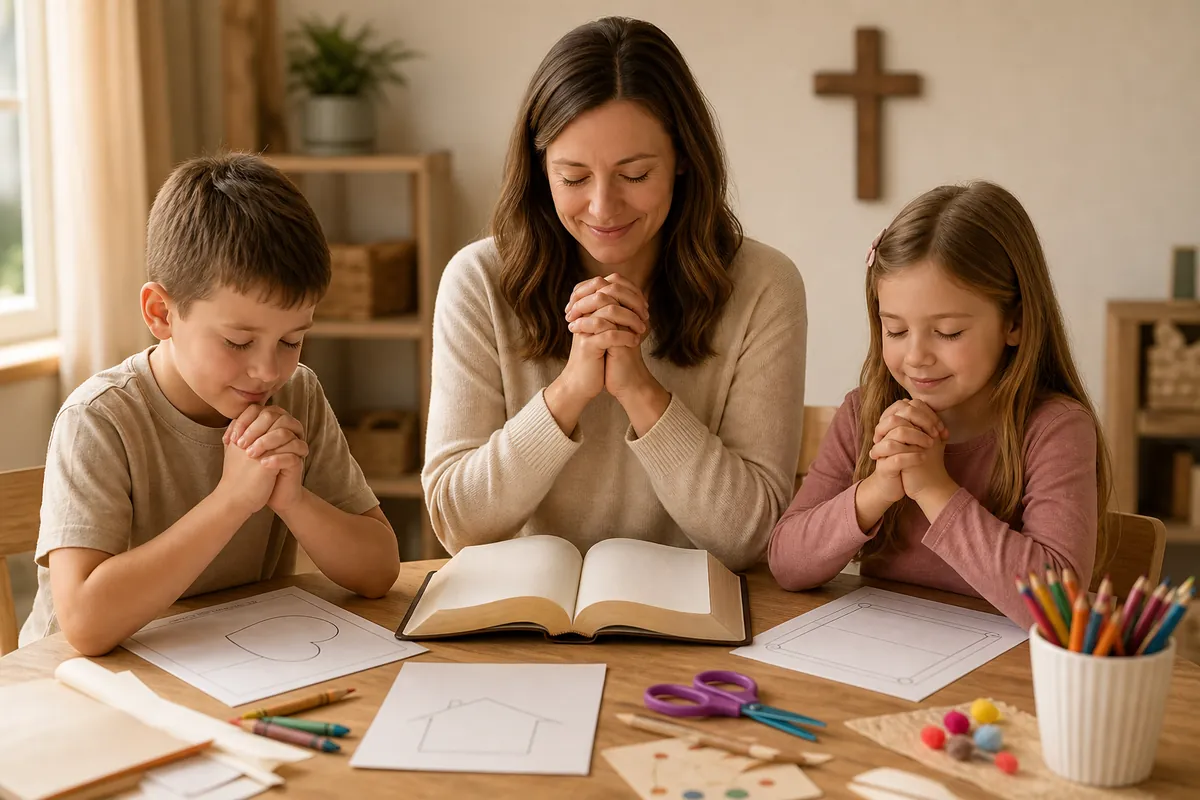
The clearest way to teach kids the Lord's Prayer is to break it into short lines, explain each one in words a child already knows, and practice it a little at a time instead of all at once. You do not need a theology degree for this. You need a few minutes, a Bible open to Matthew 6:9-13, and some patience for repetition.
Kids memorize fast but understand slowly. Teaching it line by line gives you room to do both.
Why teach the Lord's Prayer line by line?
The whole prayer is only about 60 words, but it holds seven distinct ideas: who God is, what we want for His world, what we need, what we've done wrong, and what we're asking for next. That's a lot to hand a child all at once.
Breaking it into lines lets you:
- Explain one idea before moving to the next
- Spot which part actually confuses your child
- Turn each line into a short conversation, not a lecture
- Build the whole prayer gradually, so it sticks
What age should you start teaching this?
Around age four or five, most kids can repeat short phrases and enjoy the rhythm of it, even before they grasp the meaning. That's a good place to start.
Somewhere between six and nine, kids start asking real questions about what the words mean. That's when the line-by-line explanations below do the most good. Keep talking about it even after a child has it memorized — memorization and understanding grow on different timelines.
How do you break down each line for kids?
Go through the prayer in Matthew 6:9-13 one phrase at a time. Here's a plain explanation for each line, plus a question you can ask to check if it landed.
"Our Father in heaven"
God is close like a parent, and He is also the King over everything. Ask: "What's something a good dad or mom does for their kids?"
"Hallowed be your name"
"Hallowed" just means holy and honored. This line says God's name is special, not something to toss around carelessly. Ask: "Can you think of a name or title you say carefully because you respect that person?"
"Your kingdom come, your will be done"
This is asking for God's plans, not ours, to happen — here on earth, the same way they already happen in heaven. Ask: "What's one thing you think God wants for our family?"
"Give us today our daily bread"
This is a request for what we need, day by day — food, safety, everything that keeps us going. Ask: "What did God provide for you today?"
"Forgive us our debts, as we forgive"
We say sorry for what we've done wrong, and in the same breath, we agree to forgive others. Ask: "Is there anyone you need to forgive this week?"
"Lead us not into temptation"
This asks God for help making good choices when it's hard. Ask: "What's a moment today it was tough to do the right thing?"
"For yours is the kingdom, the power, and the glory"
Some Bibles include this closing line, some don't — it's a final line of praise, wrapping the prayer back around to who God is. Ask: "What's your favorite way to describe how big God is?"
What's a simple way to practice this at home?
Don't aim for perfect recitation on day one. Aim for a little, often.
- Pick one line per day and say it together at breakfast or bedtime
- Add hand motions to each phrase — kids remember movement
- Write one line on a sticky note and put it somewhere they'll see it
- Once a week, ask what one line meant to them that day
- Say the whole prayer together once you've covered all the lines
If you're looking for a rhythm to build this into a regular habit, our post on how to start family devotions walks through getting a simple routine going without it feeling like one more thing on the list.

How can Sunday school teachers use this?
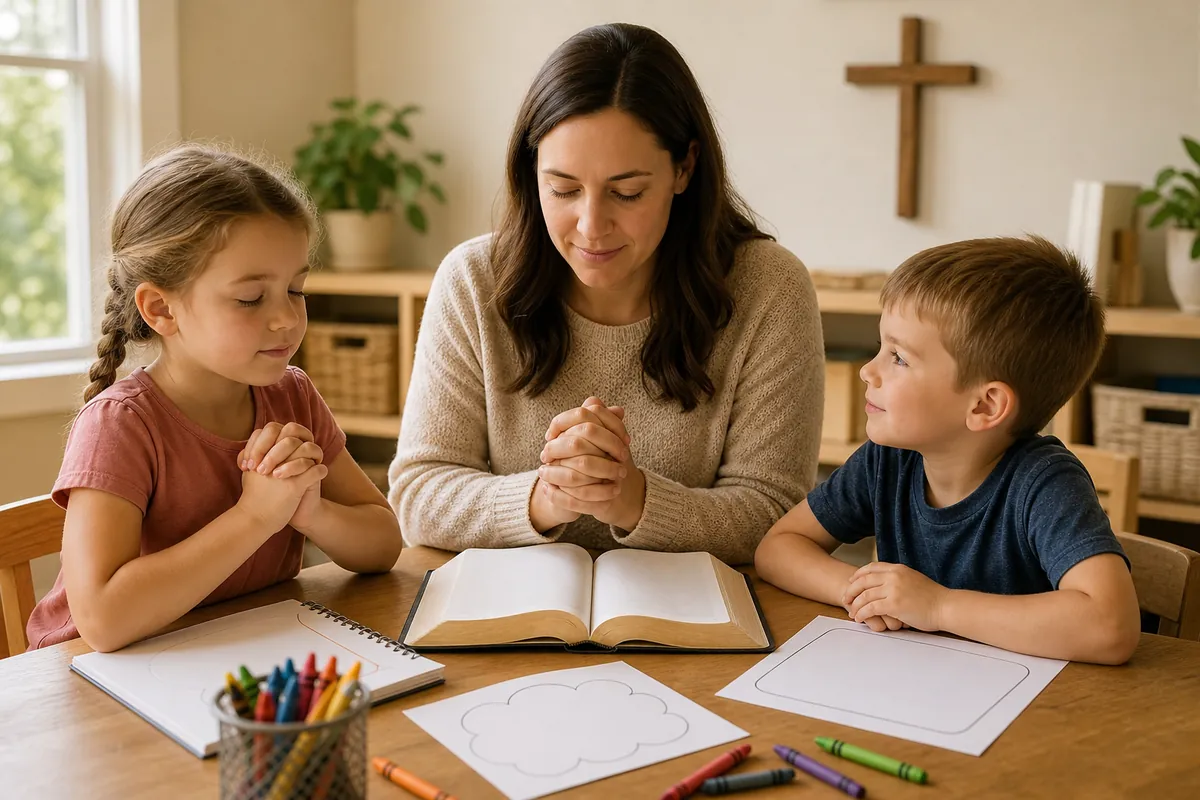
In a classroom setting, line-by-line teaching works well as a short weekly series. Cover one or two lines per class, with a short discussion question and maybe a quick drawing activity tied to that line — a picture of "daily bread," a picture of God's kingdom, whatever fits the phrase.
If you want a hands-on method for digging into any Bible passage with kids, including this one, the S.O.A.P. Bible study method for kids offers a simple structure your class can reuse well beyond this prayer. (If that link doesn't resolve, our S.O.A.P. method post covers the same ground.)
What if a child asks a hard question about it?
Kids will ask things like "Why do we need to ask for forgiveness every day?" or "What does temptation mean?" Answer honestly, in short words, and it's fine to say "let's think about that together" if you need a minute.
A tip that helps here: don't over-explain. One or two sentences per question is usually enough for a young child. You can always circle back to the same line next week and add more.
A simple way to keep the practice going
If you'd like something for kids to fill in or color while they work through each line, our Kids Prayer Worksheet is a printable Sunday school and homeschool activity built around this same line-by-line approach. It's a small aside, not a requirement — the conversation above works just as well with nothing but a Bible and a few minutes together. You can browse more printable resources like it in the shop if it's useful.
Teaching the Lord's Prayer this way isn't about getting a child to recite it flawlessly. It's about giving them words for prayer they'll carry long after the sticky notes come down.
Frequently asked questions
- What age can a child start learning the Lord's Prayer?
- Most kids can start repeating short phrases around age four or five. Real understanding of the meaning usually grows between ages six and nine, so keep explaining it even after they have it memorized.
- Should I use the King James wording or a modern translation?
- Either is fine. Many churches use the traditional wording because kids hear it recited together, but a modern translation like the NIV can make the meaning click faster for younger children.
- Is it okay to say 'debts' instead of 'trespasses'?
- Yes. Matthew 6:12 uses 'debts' and Luke 11:4 uses 'sins,' while the traditional church version says 'trespasses.' They all point to the same idea of forgiveness, so use whichever wording your family or church already knows.
- How long does it take for a child to learn the whole prayer?
- With short daily practice, most kids can say the full prayer from memory within two to four weeks. Understanding what it means usually takes longer, and that is fine.
- What if my child asks why we have to pray the same words every time?
- Tell them Jesus gave His disciples this prayer as a pattern, not a magic formula. It is fine to pray it word for word and also fine to pray their own words afterward.
- lords prayer
- kids prayer
- family devotions
- sunday school
- christian parenting
- prayer activities
Related reading
- How to Teach Kids to Read the Bible for ThemselvesLearn how to teach kids to read the Bible with simple, Scripture-first steps that build confidence and understanding.
- How to Teach Kids the Creation Story in 7 Simple DaysLearn how to teach kids the creation story with seven simple, Scripture-first lessons from Genesis 1 for home, class, or church.
- How to Teach Kids to Confess Sin Without Shaming ThemLearn how to teach kids about confession without shame using simple words, calm tone, and Scripture that points straight to forgiveness, not fear.