September 22, 2026 · 7-min read
How to Teach Kids the Creation Story in 7 Simple Days
A simple seven-day plan can help children see God’s care and creativity in every part of creation.
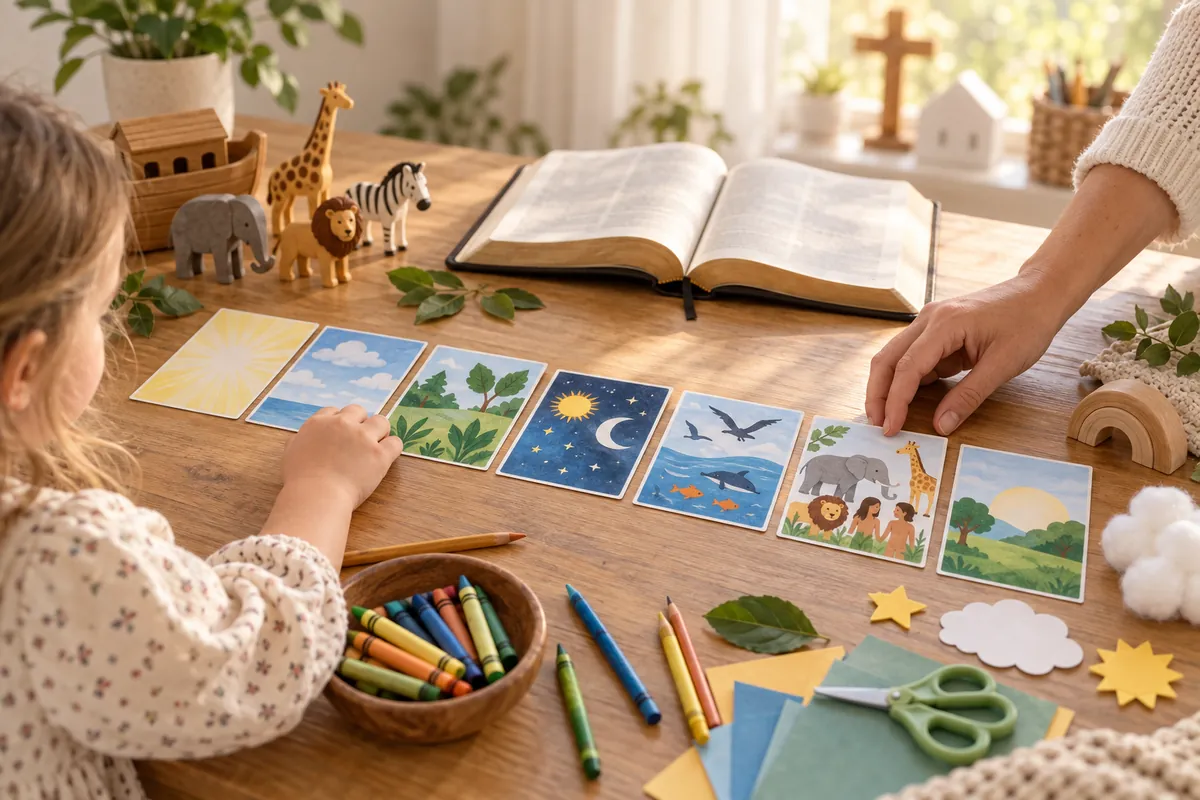
The simplest way to teach kids the creation story is to read Genesis 1 a little at a time, focus on one day of creation each session, and let children respond with a question or hands-on activity. This seven-day plan helps you teach the Bible story clearly without needing a long lesson or complicated supplies.
You can use it during family devotions, Sunday school, homeschool Bible time, or kids church. Keep your Bible open. Let the words of Scripture lead, then use simple activities to help the story stay with them.
What should kids learn from Genesis 1?
Before planning crafts or coloring pages, settle on the main truth: God created everything, and He called His creation good.
Children do not need a lecture about every detail. They need to hear that God is powerful, wise, and caring. They also need room to notice the world around them with gratitude.
A simple sentence to repeat throughout the week is:
God made the world, and God saw that it was good.
Read directly from Genesis 1 when you can. For younger children, read a few verses and explain unfamiliar words in your own calm, everyday language.
How do I prepare for seven simple days?
Gather a Bible, paper, crayons or colored pencils, and a place where children can make a small drawing each day. You may also want to display their drawings together as a creation-story timeline.
Try this easy rhythm each day:
- Read the verses together.
- Say what God made that day.
- Ask one simple question.
- Let kids draw, act out, or find something connected to the lesson.
- End with a short prayer of thanks.
You do not have to cover every question that comes up immediately. If a child asks something difficult, it is okay to say, “That is a thoughtful question. Let’s keep reading and talk about it.” This guide on handling a Bible question that stumps you can help when you need a little breathing room.
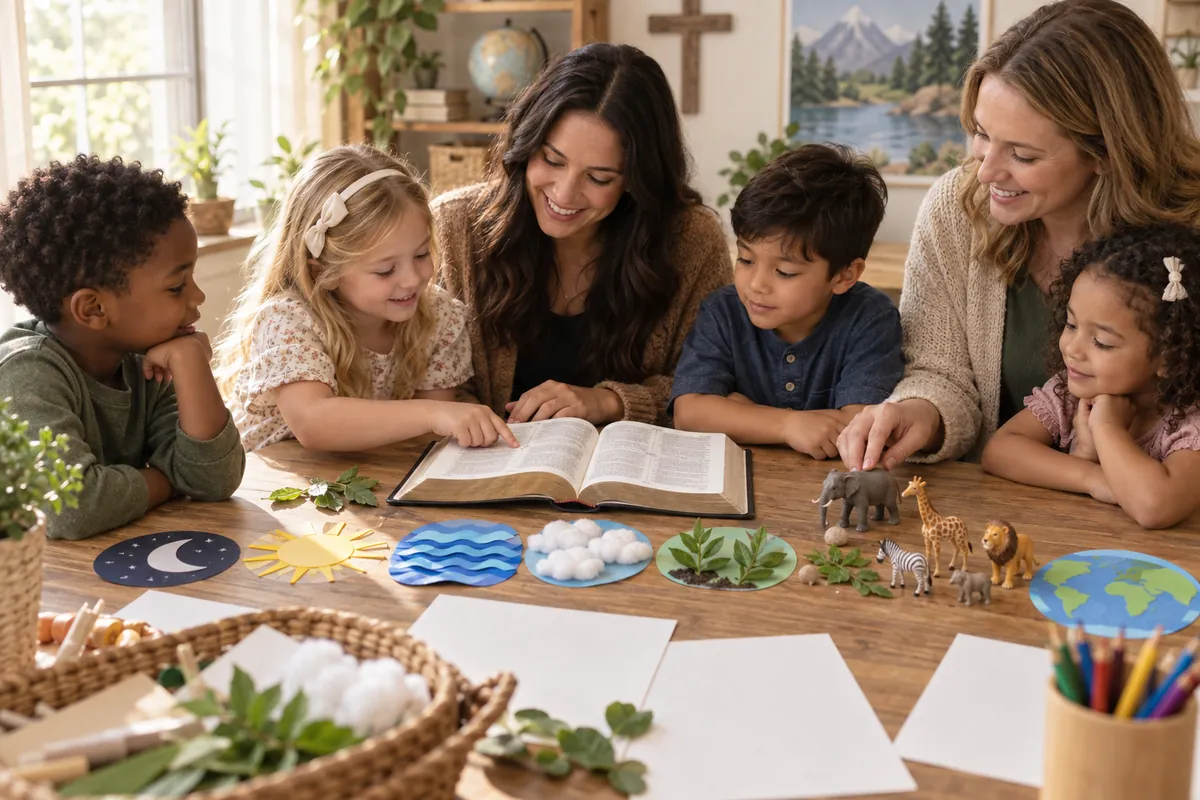
What happened on day one of creation?
Read Genesis 1:1–5. God created light and separated the light from the darkness.
Ask: “What are some times when light helps us?”
Let children draw a page divided into dark and light. They could color one side black or dark blue and the other side yellow or white. If you are teaching a group, invite them to quietly stand in a darkened room, then turn on a light and notice the difference.
Keep the focus simple: God spoke, and light came into being.
What did God make on days two and three?
On day two, God made the sky and separated the waters (Genesis 1:6–8). On day three, He gathered the waters so dry land appeared, then made plants, trees, and flowers (Genesis 1:9–13).
You can teach these as separate short sessions or pair them if your schedule is tight.
For day two, look out a window or step outside and notice the sky. Ask: “What colors do you see in the sky today?”
For day three, take a nature walk, inspect a leaf, or look at fruit and seeds from the kitchen. Ask: “What is one growing thing you are thankful God made?”
Children can draw blue sky on one page, then add land, grass, flowers, or trees on the next. Remind them that God did not make a messy world by accident. He made a world with order and life.
How can I teach days four and five?
Read Genesis 1:14–23. On day four, God made the sun, moon, and stars. On day five, He made creatures that swim and birds that fly.
For day four, make a simple sun, moon, and stars picture. Talk about how the sun helps us know it is daytime and the moon and stars can be seen at night. You do not need to make this a science lesson. Just point children back to the Maker of those lights.
For day five, have kids name animals that fly and animals that swim. Then ask: “Which animal do you think shows God’s creativity?”
A quick movement activity works well here. Let children flap like birds, swim like fish, or move like their favorite sea creature. A little movement can help a wiggly group listen again.
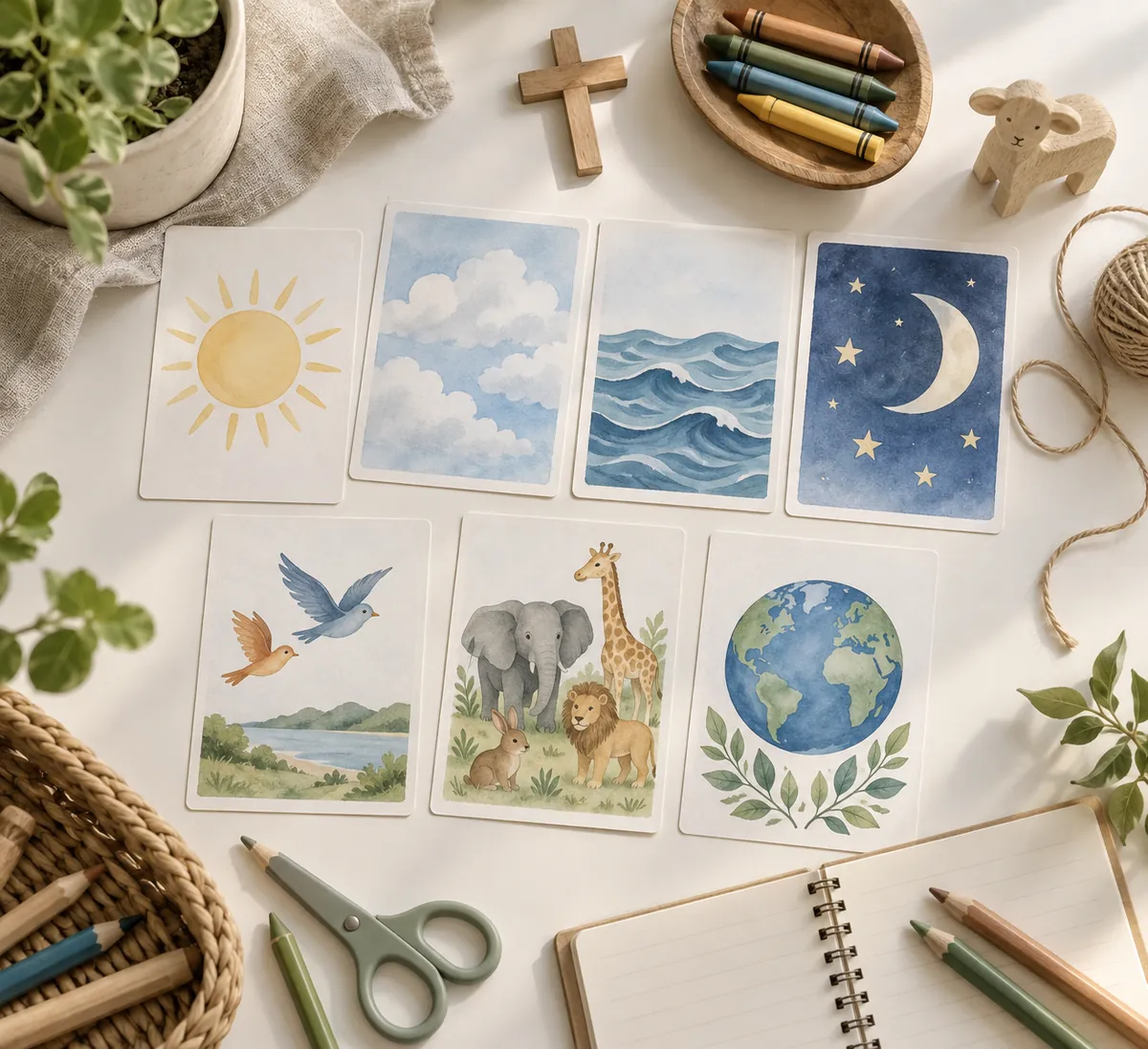
What should I say about day six?
Read Genesis 1:24–31. On day six, God made land animals and people. Genesis 1:27 tells us that people are made in God’s image.
For children, you can explain this gently: people are specially made by God, able to know Him, love others, create, care for the world, and make wise choices.
Ask: “How can we care for something God made this week?”
Their answers may be very practical:
- Be gentle with an animal.
- Put litter in the trash.
- Water a plant.
- Treat a sibling kindly.
- Thank God for their body and abilities.
This is a lovely place to speak about each child’s value. They are not here by mistake. God made people with care and purpose.
Why did God rest on day seven?
Read Genesis 2:1–3. God rested on the seventh day, not because He was tired, but because His work of creation was complete.
Kids can understand that rest is a good gift. It gives us time to stop, remember God, and enjoy what He has made.
Ask: “What is something you enjoy about God’s world?”
Consider ending your seven-day study with a quiet thank-you prayer. Let each child name one thing from creation they are grateful for: a pet, rain, trees, sunshine, their family, or a favorite food.
How do I make the lesson stick?
Review is what helps the creation story become familiar. At the end of the week, invite children to retell the seven days in order using their drawings.
You might say:
- Day one: light and darkness.
- Day two: sky and water.
- Day three: land and plants.
- Day four: sun, moon, and stars.
- Day five: fish and birds.
- Day six: animals and people.
- Day seven: God rested.
Do not worry if they mix up a day at first. Repeat the story with patience. Singing, drawing, acting it out, and retelling it over meals are all helpful ways to learn.
If family Bible time is new for you, these practical ideas for starting family devotions can make the routine feel more manageable.
Is there a simple printable activity to use?
A printable can give children a quiet, meaningful way to review what they learned after reading Genesis 1 together. If you would like one ready for home or class, this Days of Creation Bible worksheet includes a kid-friendly coloring activity to support the lesson.
The goal is not to rush through seven crafts. It is to help children know the One who made the light, land, stars, animals, and every person in the room. Read the story slowly, ask a real question, and trust that small, faithful moments matter.
Frequently asked questions
- What age is appropriate for teaching the creation story?
- Children of almost any age can learn Genesis 1. Keep the language simple for younger children and invite older children to read more of the passage and ask questions.
- Do I need special supplies for a creation lesson?
- No. A Bible, paper, crayons, and a few everyday objects are enough for a meaningful lesson.
- How long should a creation story lesson be?
- Ten to twenty minutes works well for many young children. A short Bible reading, one question, and one hands-on response can be plenty.
- What is the main truth children should learn from Genesis 1?
- God made the world with wisdom and care, and what He made was good. Children can also learn that people are made in God's image.
- creation story
- genesis 1
- bible lessons
- kids ministry
- family devotions
Related reading
- How to Teach Kids to Read the Bible for ThemselvesLearn how to teach kids to read the Bible with simple, Scripture-first steps that build confidence and understanding.
- How to Teach Kids to Confess Sin Without Shaming ThemLearn how to teach kids about confession without shame using simple words, calm tone, and Scripture that points straight to forgiveness, not fear.
- How to Teach Kids the Ten Commandments (Without a Boring List)A simple, Scripture-first way to teach kids the Ten Commandments through stories, actions, and everyday choices instead of memorization.