October 30, 2026 · 5-min read
Teaching Kids to Listen to God in Prayer (Simple Ways to Start)
Your kids talk to God all day. Here is how to help them pause and listen, too.
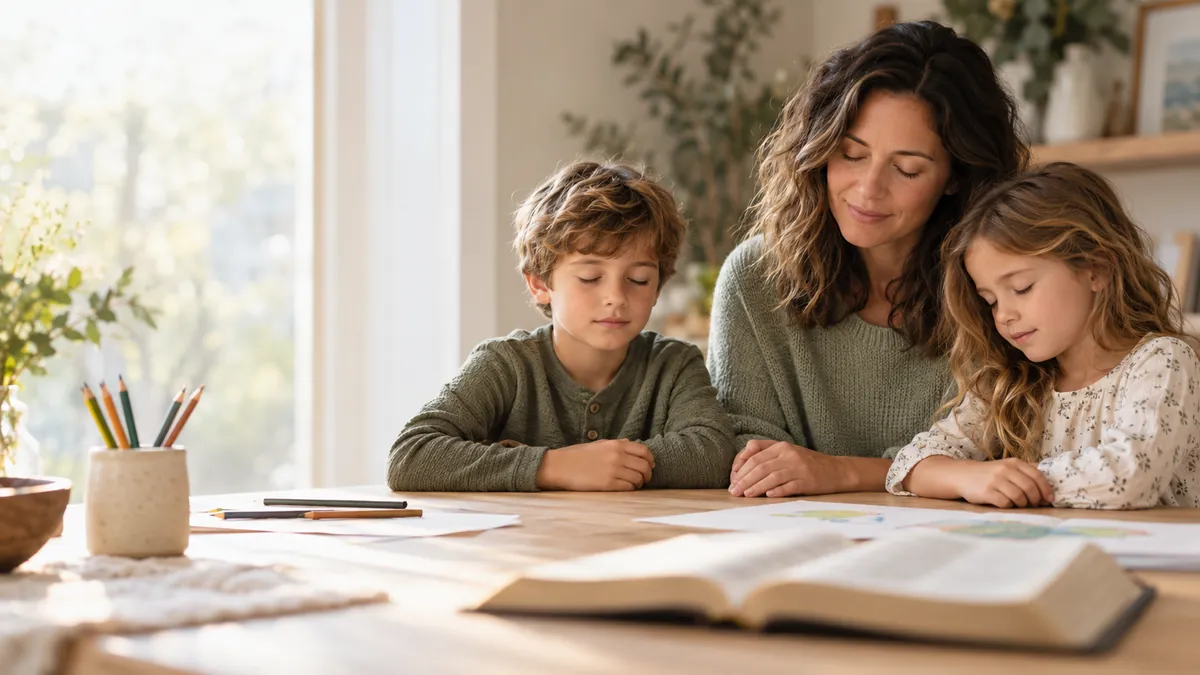
Teaching kids to listen to God in prayer means giving them a short, quiet pause after they talk, and filling it with Scripture, a simple question, and trust. It does not require special words or a feeling. It requires a calm minute and a Bible.
If your children pray fast and then run off, you are not behind. Listening is a skill, and it grows the same way talking does: a little at a time.
What does it mean to listen to God in prayer?
Listening prayer is the part of prayer where we stop talking and pay attention to God. We quiet our hearts, remember what he has already said in his Word, and ask him to help us understand and obey it.
Kids often picture listening as waiting for a voice. That can lead to confusion or pressure. A better picture is this: God has already spoken in the Bible, and listening is leaning in to hear it.
Jesus said, "My sheep listen to my voice; I know them, and they follow me" (John 10:27). That is a promise to hold onto with children. They belong to a Shepherd who knows them.
How does God speak to children?
Keep it simple and honest. Here are four ways to explain it:
- Through the Bible. This is the clearest way. "Your word is a lamp to my feet and a light to my path" (Psalm 119:105).
- Through a quiet reminder. A verse we learned may come to mind right when we need it.
- Through wise people. Parents, teachers, and pastors help us understand what God says.
- Through peace and a nudge to do right. Always checked against Scripture.
Tell your kids that God's Word is the test. If a thought does not agree with the Bible, it is not from God.
How do I start with a one-minute quiet time?
Pick a calm moment and keep it small. This works at the kitchen table, in the car line, or on the couch.
- Talk first. Let your child pray in their own words, or say a short prayer together.
- Say, "Now let's listen." Use the same words each time so it becomes a habit.
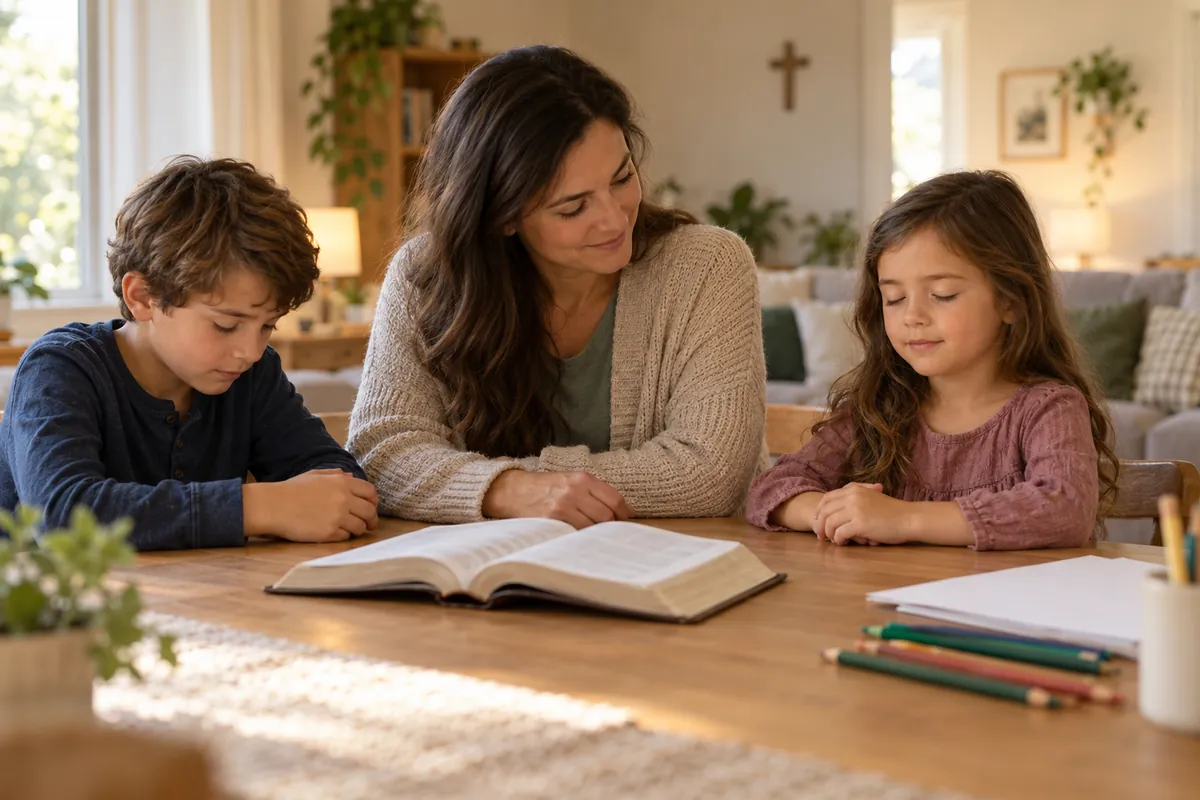
- Be still for 30 to 60 seconds. Fold hands or rest them in your lap. Keep your own eyes open if that helps you stay calm.
- Ask one question in your heart. Try, "God, what do you want me to remember today?"
- Read one verse aloud. Let the Bible be the answer.
- Share if you want. Ask, "What stood out to you?" Accept any honest answer, including "nothing."
Psalm 46:10 gives you a verse to post on the fridge: "Be still, and know that I am God."
Which Bible stories teach kids to listen?
Stories stick better than instructions. Three work well:
- Samuel (1 Samuel 3). Samuel heard his name called in the night and did not know it was God. Eli told him how to answer: "Speak, Lord, for your servant is listening." Kids can borrow that exact prayer.
- Elijah (1 Kings 19). God was not in the wind or the earthquake, but in "a gentle whisper." This is a good picture of why we need quiet.
- Mary and Martha (Luke 10:38-42). Mary sat at Jesus' feet and listened while Martha was busy. Even busy families can choose to sit.
After the story, ask, "What did they do to listen?" and "What could we do?"
How do I teach listening prayer by age?
If your children are still learning to talk to God, begin with our guide, How to Teach Kids to Pray, and add listening once they are comfortable.
Ages 3 to 5: Use a 20 to 30 second pause. Try a "listening ears" hand cupped by the ear. Follow it with one short verse, such as "The Lord is my shepherd."
Ages 6 to 9: Add the Samuel prayer. After the pause, ask, "What is one thing from the Bible you want to remember today?" Let them draw it.
Ages 10 and up: Stretch the quiet to two or three minutes. Give them a passage to read slowly, then a few lines to write about what they noticed and how they might obey. A notebook helps here, and our post on starting a prayer journal for kids shows how.
What if my child says, "I didn't hear anything"?
That is a normal answer, and it is a good moment to be kind. Try these responses:
- "That's okay. Listening is like learning to ride a bike. We practice."
- "God is still near, even when we don't notice anything."
- "Let's read what he has already said," and then open to a verse together.
Do not push a child to produce an answer. Pressure teaches kids to make something up. Praise the effort instead: "Thank you for sitting so still."
For a child who is shy about sharing, give them a quiet option such as drawing or whispering to you. Our post on gentle ways to help a shy child pray has more ideas.

How can kids tell if something is from God?
Give them three simple questions. They fit on an index card:
- Does it match the Bible?
- Does it help me love God and others?
- Would a trusted grown-up say it is wise?
If the answer to any is no, we set the thought aside. If a child says God told them something big, such as a family decision, thank them for sharing and talk it through together. You do not need to dismiss them or take it as final. Just keep the Bible at the center.
What is a simple listening prayer to copy?
Here is wording you can say aloud with your kids:
"Dear God, thank you that you hear me. Now I want to hear you. Help me be still. Speak, Lord, your servant is listening. Help me remember your Word and do what it says. In Jesus' name, amen."
Pray it before reading the Bible, before a hard day, or at the end of family devotions. If you are building that habit, how to start family devotions is a gentle place to begin.
Is there a printable that can help?
If your kids like to see and touch what they are learning, a worksheet can make the quiet time feel more concrete. The Kids Prayer Worksheet for Christian homeschool or Sunday school gives children a place to write and draw their prayers, which can include what they noticed while listening. You can also browse the rest of the printable shop if you want other options.
Start tomorrow with one minute. Talk, pause, read a verse, and say thank you. That small habit teaches your children something big: God is not just someone we speak to. He is someone we can trust to speak back through his Word.
Frequently asked questions
- How long should a child be quiet when listening to God?
- Start with 30 seconds to one minute for young children and add time slowly. A short, calm pause that ends well is better than a long one that ends in squirming.
- Does God speak to children out loud?
- The Bible shows God speaking in different ways, but the surest place we hear from him is his Word. Teach kids that listening means quiet attention, remembering Scripture, and trusting God to guide them, not waiting for a voice.
- What if my child says God told them something that seems wrong?
- Stay calm and curious. Gently ask what they thought and compare it with what the Bible says. Anything that goes against Scripture is not from God, and a parent or pastor can help them sort it out.
- At what age can kids start learning to listen in prayer?
- Even toddlers can learn a quiet moment with folded hands and a short Bible verse. Around ages 5 to 7 they can begin asking God a simple question and thinking about a Bible story. Older kids can add journaling.
- prayer for kids
- listening prayer
- teaching kids to pray
- quiet time for kids
- christian parenting
Related reading
- How to Teach Kids to Forgive (When It Feels Impossible)Learn how to teach kids to forgive with simple, Bible-based steps for when a child feels too hurt or angry to let something go.
- How to Choose a Bible Verse for Your Child's RoomA simple guide to choosing a Bible verse for kids' room decor, including verses for nurseries, dedications, and baptism keepsakes.
- Praying With Kids When Someone Is Sick: Simple Words to UseSimple, honest prayers for kids when someone is sick, with Scripture and easy ways to pray together when a family member or friend is unwell.