November 4, 2026 · 5-min read
How to Teach Kids Gratitude From the Bible (Simple Ideas)
You can't force a thankful heart, but you can plant the seeds one small habit at a time.
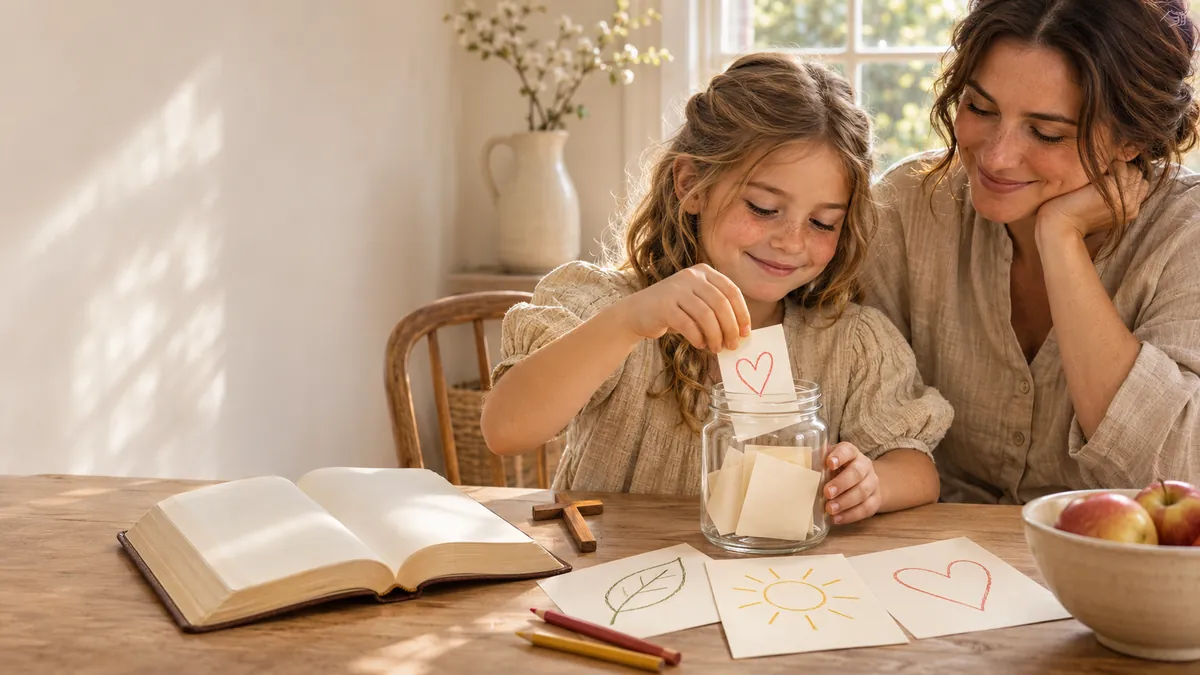
To teach kids gratitude from the Bible, pair short Bible stories about thankfulness with small daily habits like naming blessings, thanking people, and thanking God out loud. A thankful heart grows slowly, through repetition and a parent who models it.
If your child complains a lot, you are not failing. Grumbling is a very old human habit, and the Bible talks about it often. The good news is that Scripture also shows us how to turn toward thanks.
What does the Bible say about gratitude?
The Bible treats thankfulness as a response to who God is, not as a mood. Here are a few short passages that work well with kids:
- Psalm 107:1: "Give thanks to the LORD, for he is good; his love endures forever."
- 1 Thessalonians 5:18: "Give thanks in all circumstances; for this is God's will for you in Christ Jesus."
- Colossians 3:15: "And be thankful."
- James 1:17: "Every good and perfect gift is from above."
That last verse is a handy one for kids. It gives them a simple idea: good things do not come from nowhere. They are gifts.
Which Bible stories teach kids to be thankful?
Stories stick better than lectures. These two give you a clear contrast between a grateful heart and a grumbling one.
The ten men who were healed (Luke 17:11-19)
Jesus healed ten men with leprosy. Only one came back to thank him. You might ask:
- Why do you think nine kept walking?
- How do you think Jesus felt when one came back?
- What could we do when God answers a prayer?
Grumbling in the wilderness (Exodus 16)
God rescued Israel from Egypt, and soon the people were complaining about food. God still provided manna each morning. Ask your child what they would have said if they were hungry and tired in the desert. Honest answers are welcome. Then notice together that God kept providing.
You can also read Philippians 2:14, "Do everything without grumbling or arguing," as a gentle follow-up, not a scolding.
What are simple daily gratitude habits for kids?
Pick one or two. Doing a small thing every day beats a big plan you drop by Friday.
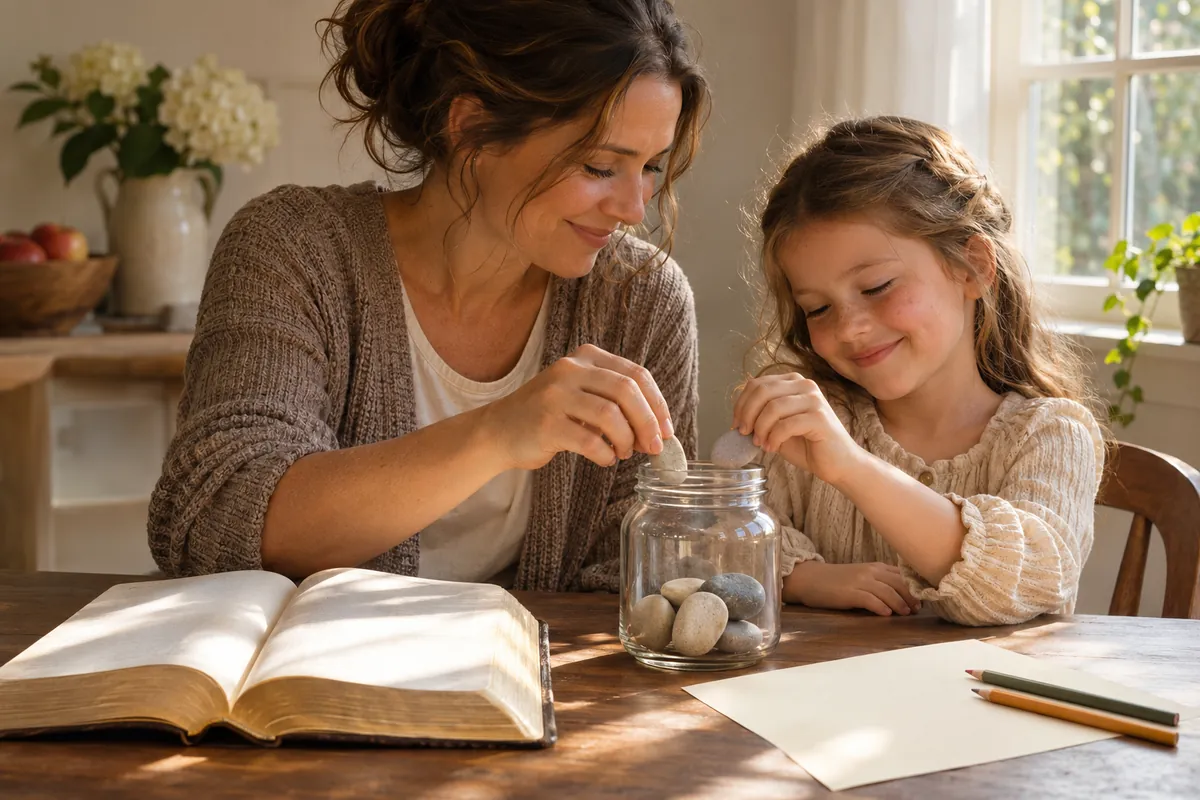
- A thankful jar. Keep a jar and a pile of smooth stones or slips of paper by the Bible. Each evening, your child drops one in and says what it stands for. Read them back on a hard day.
- Three thanks at dinner. Everyone shares one thing from the day, one person they appreciate, and one thing God provided.
- Thank a real person. Have your child draw or write a note to a teacher, pastor, grandparent, or mail carrier. Gratitude gets real when it has a face.
- Thank God by name. Instead of "thank you for everything," try "Thank you, God, for the sun today and for Grandma's visit." Specific thanks train kids to notice.
- Sing a psalm. Psalm 136 repeats "his love endures forever" in every verse. Kids can shout the refrain while you read the lines. If you want more help with talking to God, see How to Teach Kids to Pray.
How do I respond when my child complains?
Most of us snap or sigh. Try a pattern that takes the feeling seriously and then points forward.
- Name it. "It sounds like you're disappointed."
- Allow it. "It's okay to feel that way."
- Invite one thank. "Can you think of one thing that's good right now, even though this part is hard?"
- Let it go. Don't demand a big show of joy. One small honest answer is enough.
Here is some wording you can borrow:
- "I hear you. That's hard. What is one gift God gave you today?"
- "Let's pause the grumbling and thank God for one thing, then we can talk about the problem."
- "I'm thankful for you. Want to hear why?"
That last one matters. Kids learn thankfulness when they hear it spoken about them.
How can I model gratitude without being fake?
Children notice what we do far more than what we say. You don't need to be cheerful all the time. You just need to be honest and thankful in the same breath.
- Thank God out loud in the car, in the kitchen, and at the checkout line.
- When something goes wrong, say what is hard and one thing you still trust God for.
- Thank your child for specific things: "Thank you for helping your brother with his shoes."
- Apologize when you grumble. It shows that gratitude is something we keep practicing.
How does S.O.A.P. help kids practice thankfulness?
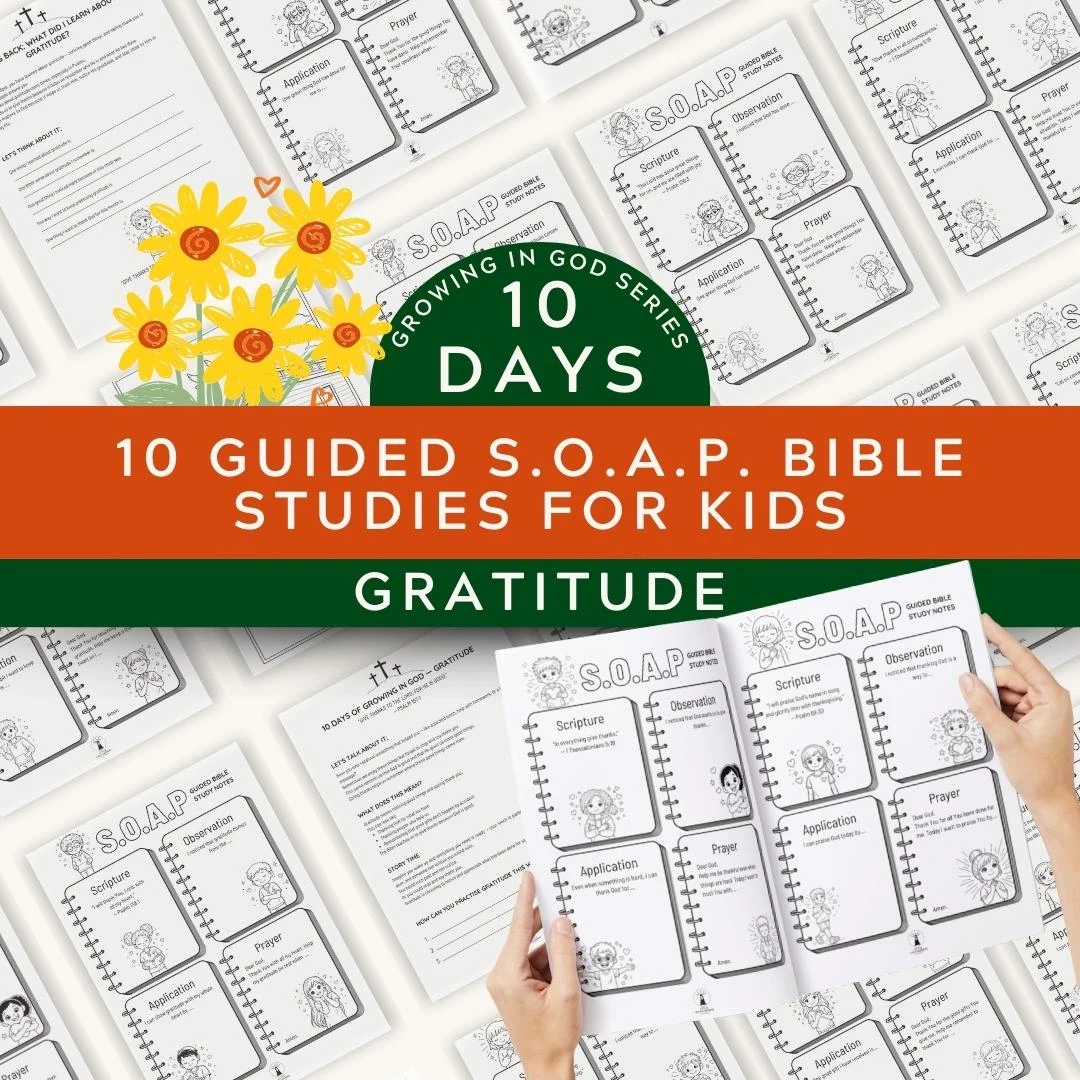
S.O.A.P. stands for Scripture, Observation, Application, and Prayer. It gives kids a simple way to slow down with a verse and ask, "What does this say, and what will I do about it?" The Application and Prayer steps are a natural place for thanks. If you're new to it, the S.O.A.P. Bible study method for kids walks through each step.
If you'd like a ready-made path for ten days, the Kids Gratitude Bible Study: 10-Day S.O.A.P. Printable (Digital Download) pairs short passages with simple writing and drawing prompts. You can also browse the rest of the printable Bible resources if you're looking for something else. It's just one option, and the jar and dinner table habits above work fine on their own.
What if it doesn't seem to be working?
Gratitude is more like a garden than a switch. You plant, you water, and some weeks you see nothing. Keep it short, keep it warm, and keep it going.
Start tonight with one stone in a jar and one thank-you to God. That's a real beginning.
Frequently asked questions
- At what age can kids start learning gratitude?
- Toddlers can start with simple words like thank you to God and to people. By ages 4 to 6, children can name things they are thankful for, and older kids can connect gratitude to Bible stories and talk about why it matters.
- What Bible verses about gratitude are good for kids?
- Psalm 107:1 is short and easy to remember: Give thanks to the LORD, for he is good. 1 Thessalonians 5:18 and Colossians 3:15 also work well for older children. Pick one and repeat it together for a week.
- How do I handle a child who complains about everything?
- Stay calm, name the feeling, and then invite one thankful thought alongside it. Gratitude does not mean pretending nothing is hard. It means learning to notice what God has given even on a hard day.
- Should I make my child say thank you?
- Teaching polite manners is good, and it is fine to prompt a thank you. But also talk about why we thank people and God, so the words slowly come from the heart and not only from a rule.
- gratitude for kids
- thankfulness
- family discipleship
- bible lessons for kids
- parenting
- homeschool
Related reading
- Christmas Bible Activities for Kids: 9 Ideas for Home and Sunday SchoolChristmas Bible activities for kids that keep Jesus at the center: nine simple printable ideas for home, homeschool and Sunday school, from Advent pages to Nativity games.
- How to Teach Kids to Forgive (When It Feels Impossible)Learn how to teach kids to forgive with simple, Bible-based steps for when a child feels too hurt or angry to let something go.
- How to Teach Kids Their Identity in Christ (Simple Ideas)Simple, Scripture-first ways to teach kids identity in Christ at home or in kids church, so comparison and put-downs lose their grip.