July 29, 2026 · 6-min read
How to Teach Kids the Books of the Bible in Order
Sixty-six books can feel like a mountain — here's how to help your child climb it one small step at a time.
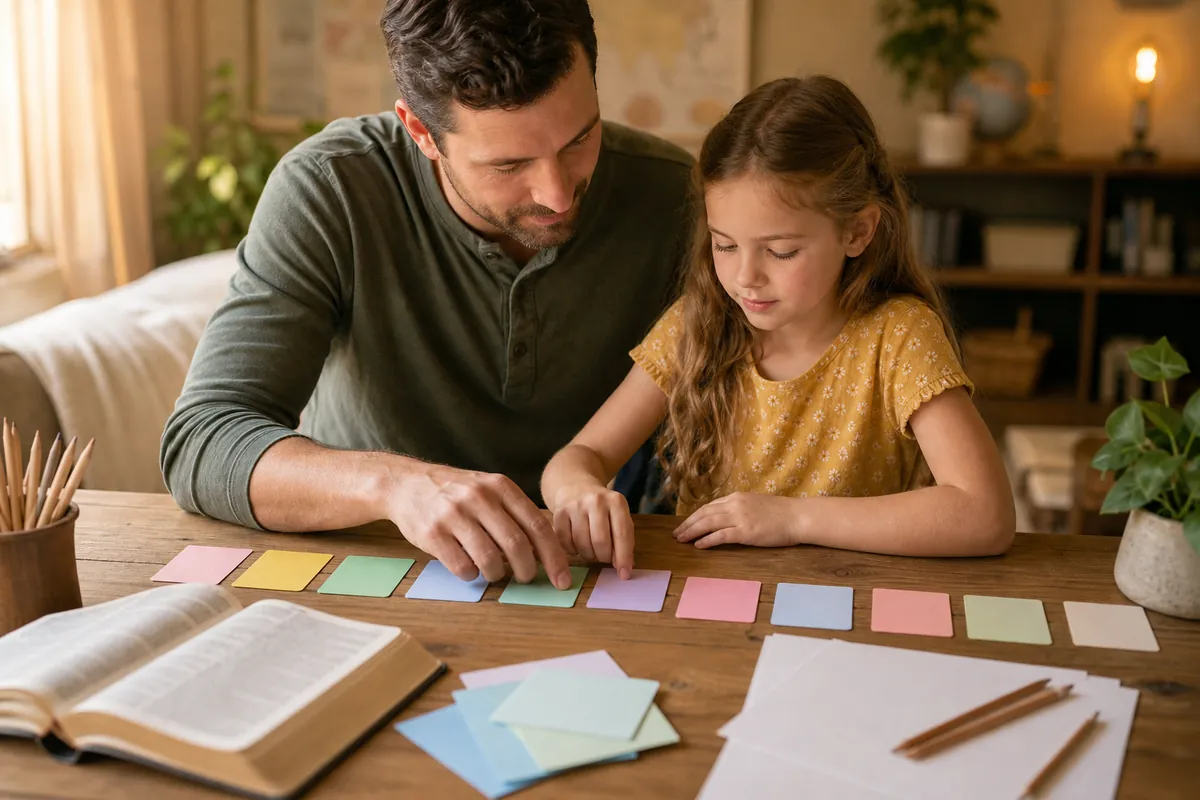
Teach kids the books of the Bible in order by breaking the 66 books into small groups, pairing each group with a simple song or rhythm, and practicing a few minutes at a time, several days a week, until the sequence becomes automatic. It works the same way learning the alphabet does — small chunks, repeated often, build into the whole.
If you have ever watched a child's eyes glaze over at the sight of "Genesis, Exodus, Leviticus..." you already know the problem. Sixty-six books, all at once, is too much for any working memory, adult or child. The fix isn't a longer study session. It's a smarter one.
What's the easiest way to teach kids Bible book order?
Chunk it, sing it, repeat it. That's the whole method, and it works whether you're homeschooling one child or leading a room of twenty at kids church.
- Chunk the 66 books into small groups of 5 to 7.
- Sing or chant each chunk to a familiar tune so the rhythm does the memorizing.
- Repeat for just a few minutes, several times a week, adding one new chunk once the last one is solid.
Kids don't need a big block of "Bible memory time" on the calendar. They need short, low-pressure repetition, the same way they picked up nursery rhymes without ever sitting down to "study" them.
How do I break the 66 books into chunks?
Start with the Old Testament's 39 books and stop there for a while. Adding the New Testament's 27 books too early is the most common reason kids stall out.
A workable grouping looks like this:
- Law — Genesis, Exodus, Leviticus, Numbers, Deuteronomy (5 books)
- History — Joshua through Esther (12 books)
- Wisdom & Poetry — Job through Song of Solomon (5 books)
- Major Prophets — Isaiah through Daniel (5 books)
- Minor Prophets — Hosea through Malachi (12 books)
Once those five chunks are steady, move to the New Testament in the same style: Gospels, Acts, Paul's letters, General letters, Revelation. Each chunk is small enough to hold in a young mind for a day, then reinforce the next.
What memory tricks actually help kids remember it?
Music beats flashcards for this particular task, almost every time. A tune gives the brain a hook that plain repetition doesn't.
A few approaches that hold up well with real kids, not just in theory:
- Set the books to a tune your child already knows. The melody carries the memory load, not the words themselves.
- Add hand motions or a beat. Clapping or tapping on each book name locks in rhythm and sequence together.
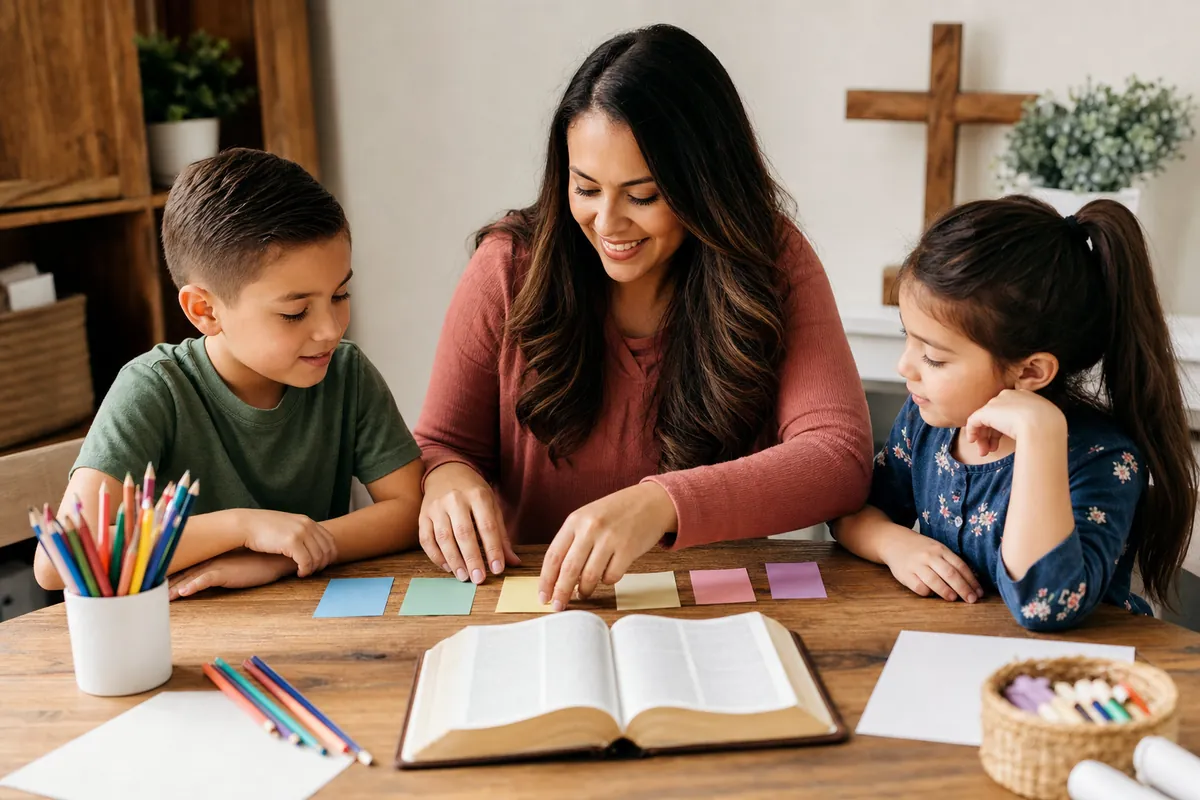
- Use a visual anchor. A bookshelf, a row of blocks, or a chart your child can point to while reciting gives the sequence a physical "place" in their mind.
- Say it, don't just hear it. Kids who sing along or recite out loud remember far better than kids who only listen.
If your child struggles with the Minor Prophets specifically — almost everyone does, there are twelve short books in a row — slow down there and don't move on until that one chunk is comfortable.
How can I make it a daily habit without a big production?
Small and boring wins. Two minutes at breakfast, in the car, or at the start of Bible time beats one long weekly session almost every time.
Try this simple weekly rhythm:
- Monday to Thursday: two minutes of recitation, reviewing what's already learned plus the newest chunk.
- Friday: a quick, low-stakes check — can they say it without help, or do they still need the song?
- New chunk: only introduced once the last one is steady, not on a fixed schedule.
This keeps pressure off. Nobody is cramming for a test. It's just part of the rhythm of the week, the same way brushing teeth is.
What if my child resists or has a short attention span?
Shrink the goal, not the effort. If a whole chunk of five or seven books feels like too much, drop to two or three books at a time and build from there.
A few things that help kids who genuinely struggle:
- Shorten the session, not the frequency. Thirty seconds, five times a day, can outperform one long attempt.
- Let them move. Marching, tapping a table, or bouncing a ball while reciting channels restlessness into the activity instead of away from it.
- Celebrate the chunk, not the whole list. "You got all of the Law books" is a real, reachable win. "You know the whole Bible" isn't, yet.
- Expect some forgetting. Kids lose ground over a busy week or a school break. That's normal — a quick review brings it back faster than starting over.
If a child still says Bible stories are boring by the time you reach this activity, it's worth pairing book-order practice with an actual story from that book, so the names attach to something they already care about.
How do I check that it's actually sticking?
Ask them to recite it without the song first, then with it if they get stuck. If they can get through a chunk unaided most of the time, it's sticking. If they can only manage it with the tune, that's still real progress — the tune is scaffolding, not cheating.
Other simple checks:
- Point to a random book on a chart and ask what comes next.
- Ask "Old Testament or New Testament?" for a handful of book names.
- Have them teach a sibling or stuffed animal the chunk they just learned — teaching back is one of the fastest ways to confirm real understanding.
Pairing this with a broader habit like family devotions gives the practice a natural home each week instead of one more thing competing for attention.
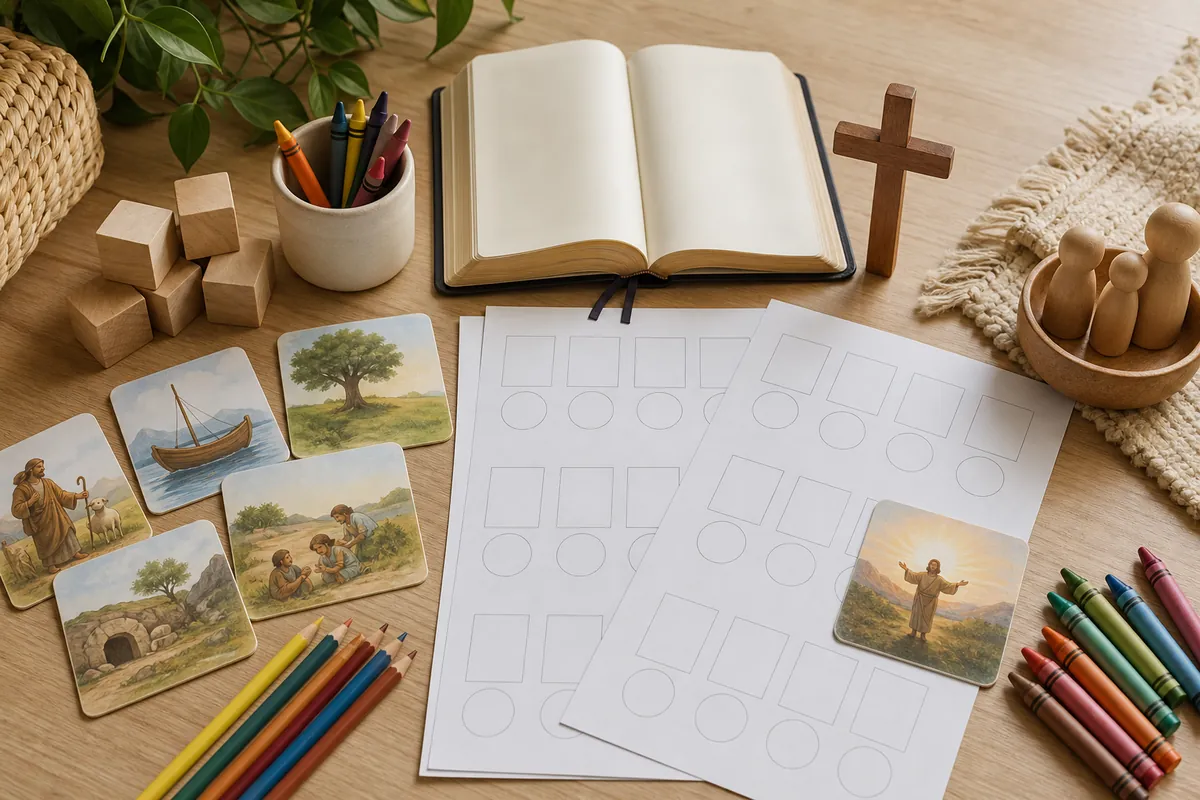
If your family or classroom likes something to hold and color while they say the books aloud, our Bible Book Tracker Bookshelf coloring activity gives kids a visual bookshelf to fill in as they learn each one — a small, printable way to see the whole Bible take shape, book by book. You can browse more Bible-learning helps in the shop as well.
Learning the books of the Bible in order isn't about a single big effort. It's small, repeated, patient practice — the same way kids learn almost everything that lasts.
Frequently asked questions
- What age should kids start learning the books of the Bible in order?
- Most kids can start around age five or six once they can recite short sequences, like days of the week. Keep early attempts playful and short, and expect real fluency to build gradually over a year or two rather than all at once.
- Is it better to teach Old Testament and New Testament separately?
- Yes, for most kids. Mastering the 39 Old Testament books first gives them a solid, confident base before adding the 27 New Testament books, rather than mixing both sets and doubling the load too soon.
- What is the easiest song for teaching the books of the Bible?
- Any simple, repetitive tune your child already knows works well, since the melody carries the memory load instead of the words. There is no single required song; pick one that fits your family or classroom and stick with it consistently.
- How long does it typically take a child to learn all 66 books in order?
- With a few minutes of consistent practice most days, many kids reach solid recall within eight to twelve weeks. Kids who practice less often, or who are younger, may take a full school term or longer, which is completely normal.
- Should I make my child memorize the books or just recognize the order?
- Recognition and general order matter more than perfect memorization for younger kids. Save word-for-word, no-hesitation recitation as a goal for older elementary kids who already enjoy the challenge.
- bible basics
- homeschool
- sunday school
- bible memorization
- kids church
- family devotions
Related reading
- How to Teach Kids to Read the Bible for ThemselvesLearn how to teach kids to read the Bible with simple, Scripture-first steps that build confidence and understanding.
- How to Teach Kids the Creation Story in 7 Simple DaysLearn how to teach kids the creation story with seven simple, Scripture-first lessons from Genesis 1 for home, class, or church.
- How to Teach Kids to Confess Sin Without Shaming ThemLearn how to teach kids about confession without shame using simple words, calm tone, and Scripture that points straight to forgiveness, not fear.