October 23, 2026 · 6-min read
How to Teach a Toddler to Pray (Without Overcomplicating It)
Your toddler doesn't need the right words to pray. They just need you to start.
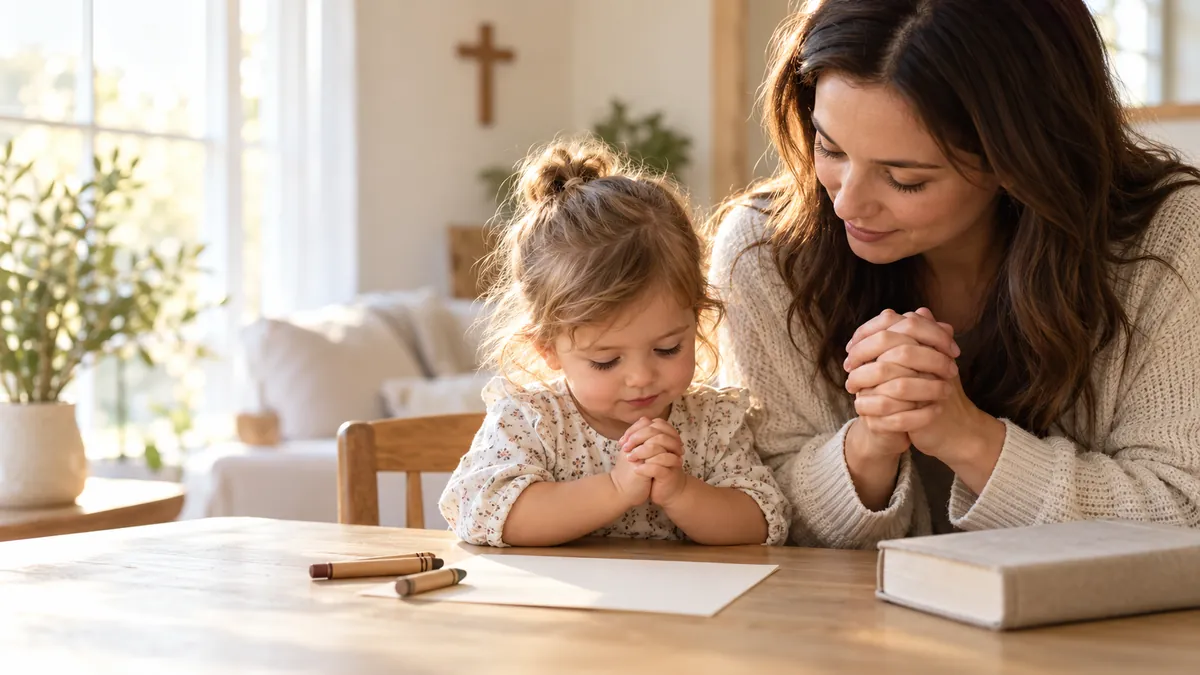
You teach a toddler to pray by keeping it short, saying it out loud yourself, and letting them join in with whatever they can manage — a word, a sound, or just folded hands. At this age, prayer is less about words and more about rhythm and presence.
That's genuinely good news. You don't need a script. You don't need your toddler to sit still, understand theology, or say anything at all. You just need to start, and start small.
Why does prayer matter at this age?
Toddlers can't reason through faith yet, but they can feel safety, rhythm, and love. That's exactly what early prayer builds.
When you fold your hands before a snack or say a quick thank you before bed, your toddler isn't learning doctrine. They're learning that talking to God is a normal, safe part of life — like brushing teeth or saying goodnight.
Jesus welcomed children freely and didn't ask them to understand first. "Let the little children come to me, and do not hinder them, for the kingdom of God belongs to such as these" (Mark 10:14). Prayer with a toddler works the same way. Come as you are, as little as you are.
How short should a toddler's prayer be?
Shorter than you think. Five to fifteen seconds is plenty for a one- or two-year-old.
Try phrases like:
- "Thank you, God, for this food."
- "Thank you, God, for Mommy and Daddy."
- "God, help me sleep."
- "Thank you, God, for today."
Say it, then pause so your toddler can add a word or sound if they want to. Some days they'll say "Amen" loudly and proudly. Other days they'll grab the spoon before you finish. Both are fine.
What moments work best for praying?
Attach prayer to things that already happen every day. Toddlers thrive on repetition, so a consistent moment works better than a special occasion.
Good anchor points:
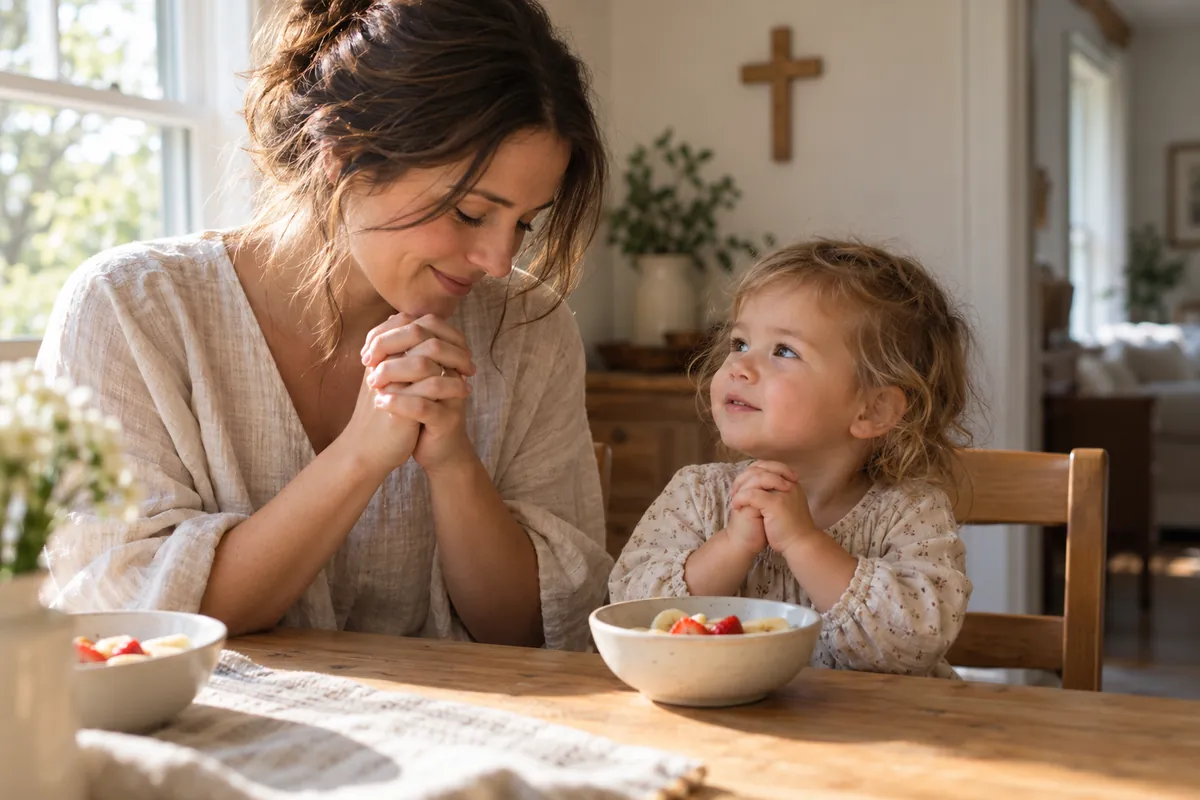
- Mealtimes. A quick thank-you before snacks or meals.
- Car seat or stroller. A short prayer when buckling in.
- Bedtime. One sentence after the last book, before the light goes off.
- Waking up. A simple "good morning, God" while getting dressed.
Pick one or two of these to start. Trying to pray at every transition in the day will wear you out before it becomes a habit.
How do I get my toddler to actually join in?
Model it out loud, every time, without quizzing them. Toddlers learn by watching and repeating, not by being asked to perform.
A few things that help:
- Fold your own hands first. They'll copy the posture before they copy the words.
- Use the same opening every time. "Dear God" or just "God" said the same way builds recognition.
- Leave a gap. Pause after a line so they can fill in a word if they want to.
- Celebrate whatever they offer. A grunt, a giggle, or one real word all count as participating.
Don't correct them or ask "what do you say?" like it's a test. Prayer isn't a manners lesson. It's a conversation they're invited into, not one they have to pass.
What if my toddler gets distracted or walks away?
Let them. A toddler who wanders off mid-prayer hasn't failed at anything, and neither have you.
Keep praying your short line even if they're not looking at you. They're still absorbing the sound, the rhythm, and the fact that it happens. Over weeks and months, that repetition does more than forcing stillness ever could.
If mealtime prayer is especially hard to hold their attention for, try pairing it with something tactile, like holding a piece of bread or touching the table, so their hands have a job while their ears are listening.
Does it matter if I use the same prayer every time?
Not at all — in fact, sameness helps. Toddlers find comfort in repeated patterns, the same way they do with a favorite book read the same way every night.
Using one go-to prayer for meals and another for bedtime gives your toddler something predictable to anchor to. As they get older, you can slowly add variety, swap in new things to thank God for, or let them choose who to pray for. For now, repetition is a feature, not a limitation.
If you're looking for a next step once your toddler grows into preschool and early elementary years, the hub guide How to Teach Kids to Pray walks through age-by-age ideas, including simple frameworks kids can grow into.
What comes after toddler prayers?
As your toddler grows into a preschooler, they'll start adding their own words and ideas to prayer time. That's the moment to gently introduce structure, like naming specific people or things to thank God for.
Bedtime is often the easiest place to grow this habit, since it's already quiet and consistent. If you want a few more lines and a simple routine to lean on as your child gets a bit older, Bedtime Prayers for Kids has some that work well as a next step up from a one-line toddler prayer.
For hands-on practice once your child is ready to hold a crayon and point to pictures, a simple Kids Prayer Worksheet can give early preschoolers something to look at and touch while they listen, which helps the wiggliest among them stay engaged a little longer. You'll find more printable options like it over in the shop as your child grows.
A gentle place to start tonight
Pick one moment — probably bedtime or the next meal — and say one short sentence out loud. "Thank you, God, for today." That's it. That's teaching a toddler to pray.
You don't need the right words or a quiet room. You just need to keep showing up, saying it simply, and letting your toddler join in however they can. The habit builds the faith; the words come later.
Frequently asked questions
- What age should I start teaching my toddler to pray?
- You can start as soon as your toddler can sit with you for a minute or repeat sounds, usually around 12 to 18 months. The goal at this age is exposure and rhythm, not understanding every word.
- What if my toddler won't sit still for prayer?
- Keep it under 30 seconds and pray during something they're already doing, like eating or getting into the car seat. A squirming toddler can still be praying; stillness is not the goal.
- Should I teach my toddler to memorize a prayer?
- A short repeated phrase like thank you God helps more than a long memorized prayer at this age. Memorization can come later; right now you are building a habit and a feeling of safety around prayer.
- Is it okay if my toddler just repeats words without understanding them?
- Yes. Toddlers learn language and faith the same way, by hearing it over and over before they fully grasp it. Understanding grows with repetition, not the other way around.
- prayer for kids
- toddlers
- christian parenting
- family devotions
- early faith formation
Related reading
- How to Explain the Trinity to Kids (Without Confusing Them)Learn how to explain the Trinity to kids with simple, accurate words and examples that avoid confusing analogies and stay close to Scripture.
- Journey to Bethlehem: A Christmas Bible Map for KidsFollow the journey to Bethlehem in eight stops, from Nazareth to Egypt and home, with Bible verses and a simple family activity for each stop.
- Bible Journaling Tip-Ins for Kids: What They Are and How to Use ThemWhat Bible journaling tip-ins are, how to add them to a Bible or journal, and simple ways kids and families can use them for prayer, Bible stories and sermon notes.