July 17, 2026 · 6-min read
How to Explain the Fruit of the Spirit to Kids (Simple Chart Idea)
Nine big words from Galatians can feel abstract to a seven-year-old. A simple chart and everyday examples change that fast.
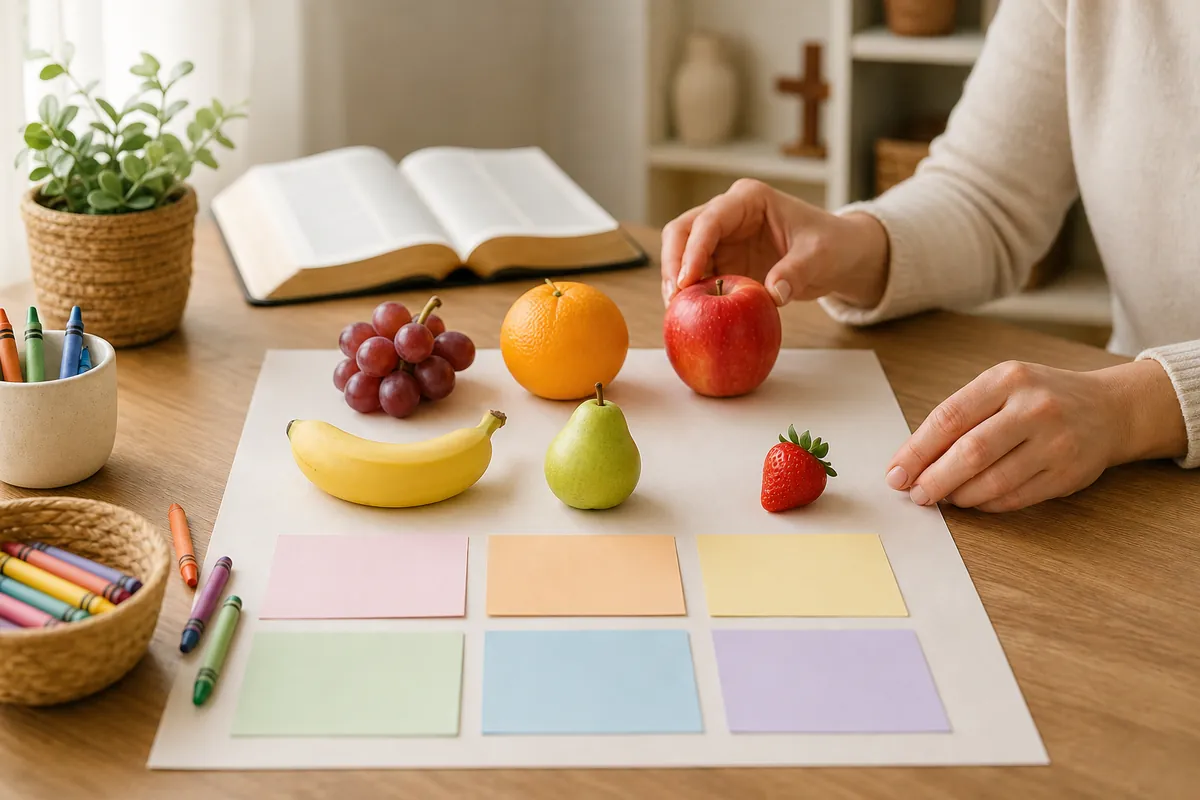
The easiest way to teach fruit of the spirit to kids is to skip the definitions and start with pictures, actions, and everyday moments they already recognize. A simple chart that pairs each of the nine fruits with a real-life example does more in five minutes than a paragraph of explanation ever will.
Galatians 5:22-23 is short, but it's packed. For an adult, "gentleness" and "faithfulness" carry years of context. For a child, they're just words. The fix isn't a longer explanation. It's a shorter, more concrete one.
What Is the Fruit of the Spirit, Simply Put?
Paul writes it plainly: "the fruit of the Spirit is love, joy, peace, forbearance, kindness, goodness, faithfulness, gentleness and self-control" (Galatians 5:22-23). Kids don't need the theology of that sentence yet. They need the shape of it.
Here's a way to say it to a child:
- When God's Spirit lives in someone's heart, it grows good things there.
- Just like an apple tree grows apples, a Spirit-filled heart grows these nine things.
- You can't force fruit to grow overnight, and you can't force these either. They grow with time.
That last point matters. Kids (and honestly, grown-ups) can feel discouraged when they mess up. Naming the fruit as something that grows, not something you either have or don't, takes the pressure off.
How Do I Explain Each Fruit in Kid-Friendly Words?
Give each fruit one plain-English sentence and one small example a child could act out today.
- Love – Caring about someone even when it's not your turn to be cared for.
- Joy – Feeling glad on the inside, not just when things go your way.
- Peace – Staying calm instead of stirring things up.
- Patience – Waiting without whining.
- Kindness – Doing something nice without being asked.
- Goodness – Choosing the right thing, even when no one's watching.
- Faithfulness – Keeping a promise, even a small one.
- Gentleness – Using soft words and soft hands.
- Self-control – Stopping yourself before you say or do something you'd regret.
Say one out loud at breakfast and ask, "What would that look like at school today?" Kids answer better than adults expect.
How Can a Simple Chart Help Kids Remember It?
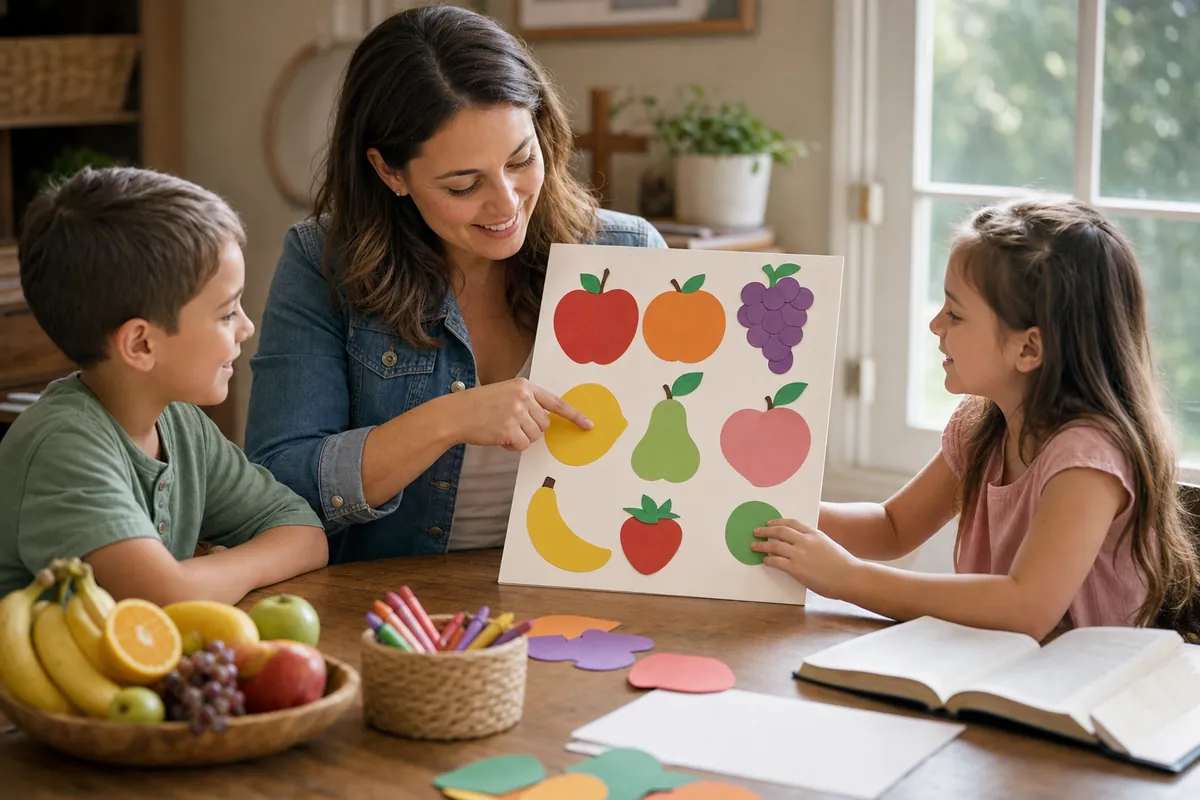
Nine words is a lot to hold in your head, especially for a young child. A chart turns nine abstract nouns into nine small pictures, and pictures stick.
A basic fruit of the spirit chart needs only three columns:
- The word (love, joy, peace, and so on)
- A simple picture or symbol (a heart for love, a smiling sun for joy, two clasped hands for peace)
- A one-line example in the child's own words
You don't need art skills. Stick figures work fine. What matters is that the child sees all nine fruits laid out together, so they understand it's one connected list, not nine separate lessons.
Hang the chart somewhere it'll actually get seen, on the fridge, by the breakfast table, or on a classroom wall at kids' church. Repetition, not a single lesson, is what makes it stick.
What Does a Fruit of the Spirit Chart Look Like in Practice?
Here's one simple layout you can copy on paper or a whiteboard:
- Draw a tree trunk with nine branches.
- Label each branch with one fruit word.
- Let kids draw or glue a paper fruit on each branch as they learn it.
- Add a sticky note under each fruit with their own example from that week.
This works well over nine weeks, one fruit at a time, or as a single fast overview if you're short on time. Either way, the visual of a full tree by the end gives kids a sense of completion that a worksheet alone doesn't.
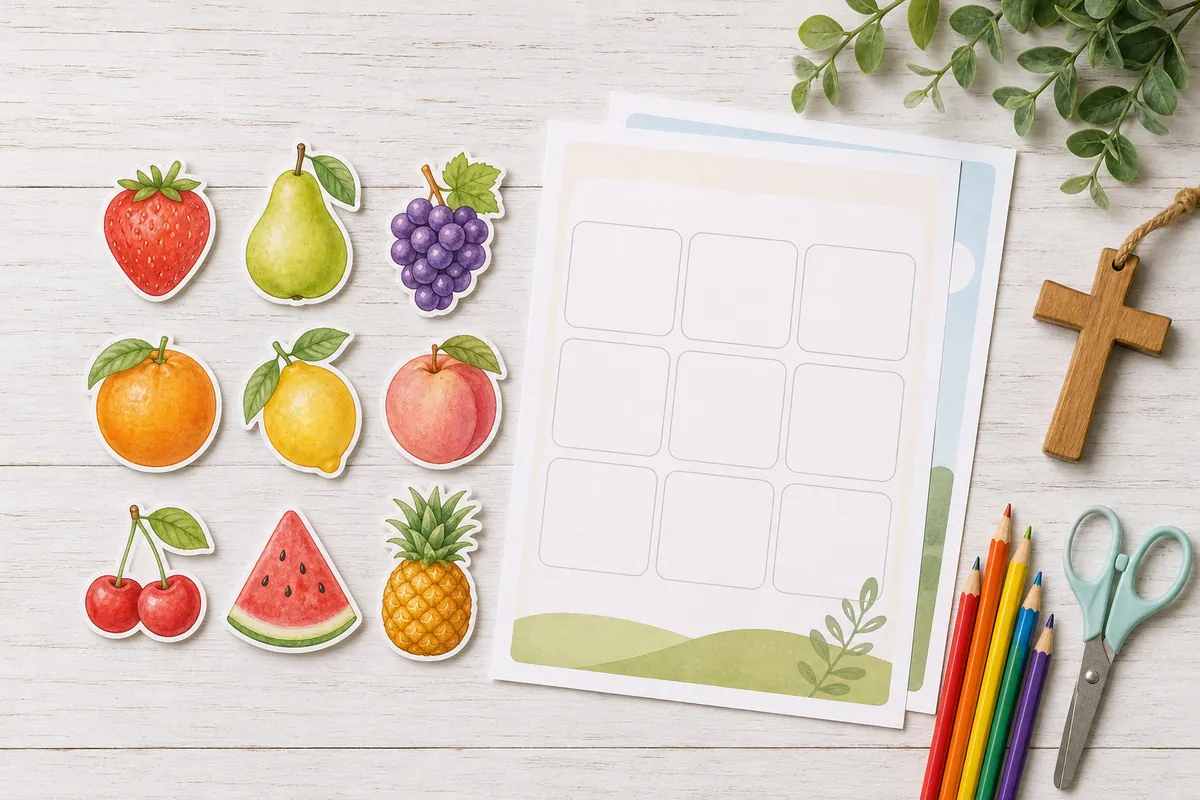
If you're teaching this in a group setting and want a ready-made version to send home with kids, this is one of the places a printable can save you time. We touch on that near the end.
How Do I Use This at Home or in Sunday School?
At home, this works best woven into normal life rather than taught as a separate lesson.
- Pick one fruit a week and mention it once a day, briefly.
- Notice it out loud when you see it: "That was patience, waiting your turn like that."
- Ask at dinner, "Did anyone see kindness happen today, at school or at home?"
In a classroom or kids' church setting, the same chart works as a group activity:
- Assign each small group one fruit to act out silently while the others guess.
- Read Galatians 5:22-23 together, then have kids circle the fruit they think they're strongest in and one they want to grow.
- Use the chart as a takeaway so the conversation continues at home.
If your group already has a rhythm for asking bigger questions kids bring up mid-lesson, How to Handle a Kid's Question That Stumps You in Bible Class is worth keeping close by, because fruit-of-the-spirit conversations tend to raise honest questions fast, especially around self-control and patience.
How Do I Keep the Lesson Going All Week?
One sitting rarely makes nine new words stick. A short daily touchpoint does more than a longer one-time lesson.
- Revisit the chart for thirty seconds each morning.
- Let the child pick which fruit they want to "practice" that day.
- Check in that evening, no grading, just a quick "how'd it go?"
If your family is still figuring out a rhythm for this kind of daily conversation, How to Start Family Devotions walks through building that habit from scratch, without it feeling like one more thing on the list.
For a bit of extra reinforcement between lessons, some families like having something small and physical the child can hold onto, a bookmark with the nine fruits listed for quick reference while they read. Our Fruits of the Spirit bookmarks were made for exactly that, a quiet visual reminder tucked into whatever book they're reading next. You can browse the full shop for other printables built around the same idea, short, visual reminders that support a bigger conversation rather than replace it.
Nine words, nine pictures, one week at a time. That's really all it takes to start.
Frequently asked questions
- What is the easiest way to explain the fruit of the spirit to a child?
- Connect each fruit to a moment they already understand, like sharing a toy for kindness or waiting their turn for patience, rather than defining the word first.
- How many fruits of the spirit are there?
- There are nine, listed together in Galatians 5:22-23: love, joy, peace, patience, kindness, goodness, faithfulness, gentleness, and self-control.
- What age is best for teaching the fruit of the spirit?
- Most kids can grasp the basic idea by age four or five using pictures and simple actions, with deeper conversation about each fruit fitting well from about age seven onward.
- Why is it called fruit and not fruits in the Bible?
- Galatians 5:22-23 uses the singular fruit on purpose, showing these nine qualities grow together from one source, the Holy Spirit, rather than being nine separate things to pick and choose from.
- fruit of the spirit
- bible teaching tips
- sunday school
- kids church
- family devotions
- galatians 5
Related reading
- How to Teach Kids to Read the Bible for ThemselvesLearn how to teach kids to read the Bible with simple, Scripture-first steps that build confidence and understanding.
- How to Teach Kids the Creation Story in 7 Simple DaysLearn how to teach kids the creation story with seven simple, Scripture-first lessons from Genesis 1 for home, class, or church.
- How to Teach Kids to Confess Sin Without Shaming ThemLearn how to teach kids about confession without shame using simple words, calm tone, and Scripture that points straight to forgiveness, not fear.