October 14, 2026 · 6-min read
Mealtime Prayers and Grace for Kids: Simple Ideas That Stick
Grace doesn't have to be the line everyone mumbles through before the forks come out.
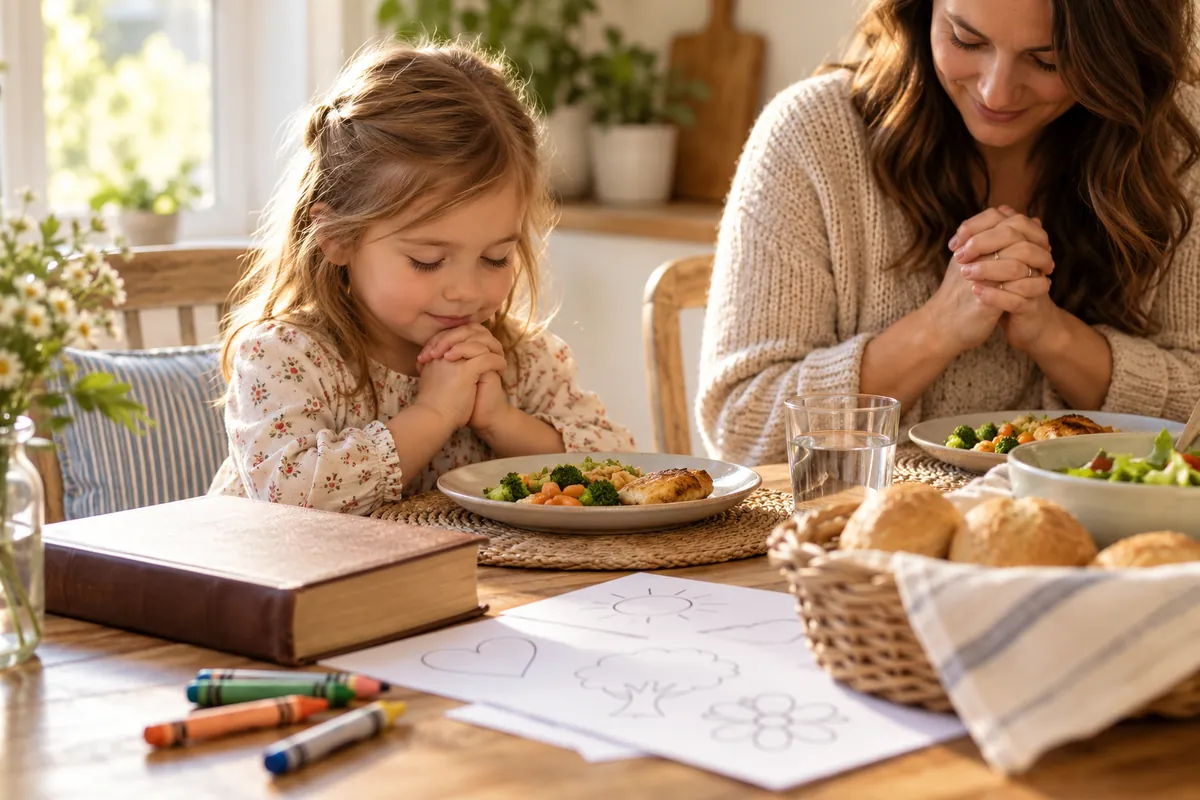
Mealtime prayers for kids work best when they're short, said the same way often enough to memorize, and simple enough for a toddler to join in. A few lines of thanks before dinner, said consistently, will stick with a child far longer than a long prayer said once.
Grace gets a bad reputation in a lot of homes. It turns into a mumbled line everyone says out of habit, eyes already on the plate. That doesn't have to be the case. With a little intention, mealtime prayer can become one of the steadiest, most loved parts of your child's day.
Why does mealtime prayer matter for kids?
Mealtime happens every day, often more than once. That makes it one of the best built-in habits for teaching kids to pray.
Scripture backs this up in a plain way. Paul tells Timothy that everything God created is good, "and nothing is to be rejected, if it is received with thanksgiving" (1 Timothy 4:4). Grace is the practice of pausing to receive the meal with thanks instead of just eating it.
A few reasons this small habit matters more than it seems:
- It teaches gratitude as a daily rhythm, not just a Sunday thing.
- It gives kids a safe, repeatable way to talk to God out loud.
- It turns a routine moment into a shared family memory.
- It models that prayer doesn't need to be long or formal to count.
What makes a mealtime prayer kid-friendly?
Kids remember rhythm and repetition, not length. A good mealtime prayer for children usually has three things going for it.
- It's short. Five to fifteen seconds is plenty for toddlers and preschoolers.
- It rhymes or has a pattern. Rhyme helps young memories hold on to words.
- It's said the same way most nights. Familiarity is what lets a two-year-old join in.
If a prayer checks those three boxes, your child will likely be saying it on their own within a few weeks.
What are some simple mealtime prayers to try?
Here are a few that families have used for generations, plus a couple of fresh options if you want variety.
Classic and short:
- "God is great, God is good, let us thank Him for our food. Amen."
- "Thank You for the world so sweet, thank You for the food we eat. Amen."
- "Bless this food to our use, and us to Thy service. Amen."
Slightly longer, still simple:
- "Dear God, thank You for this food, for the hands that made it, and for this family. Help us share it with love. Amen."
- "Thank You, God, for this day, for this food, and for each person at this table. Amen."
One-word-at-a-time (great for toddlers):
Go around the table and have each person say one thing they're thankful for before someone closes with "Amen." It's not fancy, but it teaches thankfulness in a way kids can actually participate in.
How do I teach a toddler to say grace?
Toddlers learn by doing it with you, not by being told how. A few things that help:
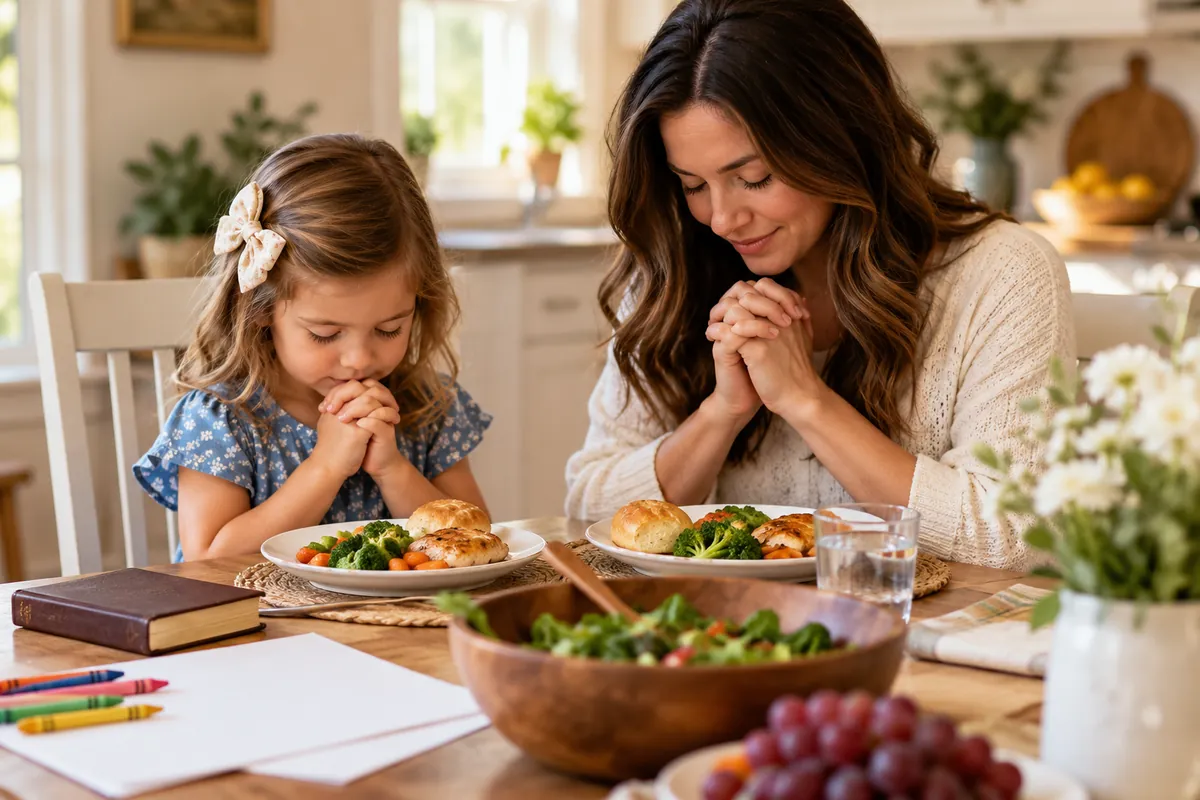
- Fold hands together. The physical action becomes a cue that it's time to pray, even before they know the words.
- Say it slowly and the same way each time. Repetition is what makes memorization possible at this age.
- Let them join in on the last word. Most toddlers will pick up "Amen" first, then start filling in more over time.
- Don't correct too much. A mumbled or mixed-up grace from a three-year-old is still a prayer. Let it be imperfect.
How can I keep grace from feeling rushed or routine?
Even good habits can go stale. If grace has turned into something everyone rushes through, try one of these:
- Rotate who leads. Let a different child say grace each night. Ownership changes everything.
- Add one gratitude line. After the usual prayer, have each person name one good thing from their day.
- Use a prayer that ties to the meal. Thank God specifically for something on the table — the bread, the vegetables, the person who cooked.
- Pause before "Amen." A few seconds of quiet before closing can turn a quick recitation into an actual moment of reflection.
If your family already keeps a prayer journal, mealtime is a natural spot to jot down a quick thank-you line kids said at the table that day. It gives the habit a little more weight without adding pressure.
Does mealtime prayer connect to a child's prayer life?
Yes. Mealtime grace is often a child's very first regular, hands-on experience with prayer. It's simple enough for a toddler and familiar enough that it becomes a safe starting point before they move on to longer prayers at bedtime or in a group setting.
If you're building out a broader approach to prayer with your kids, our guide to teaching kids to pray walks through age-by-age ideas, the ACTS method, and ways to help kids pray for others — mealtime grace fits right in as the daily anchor point.
A simple way to make it stick
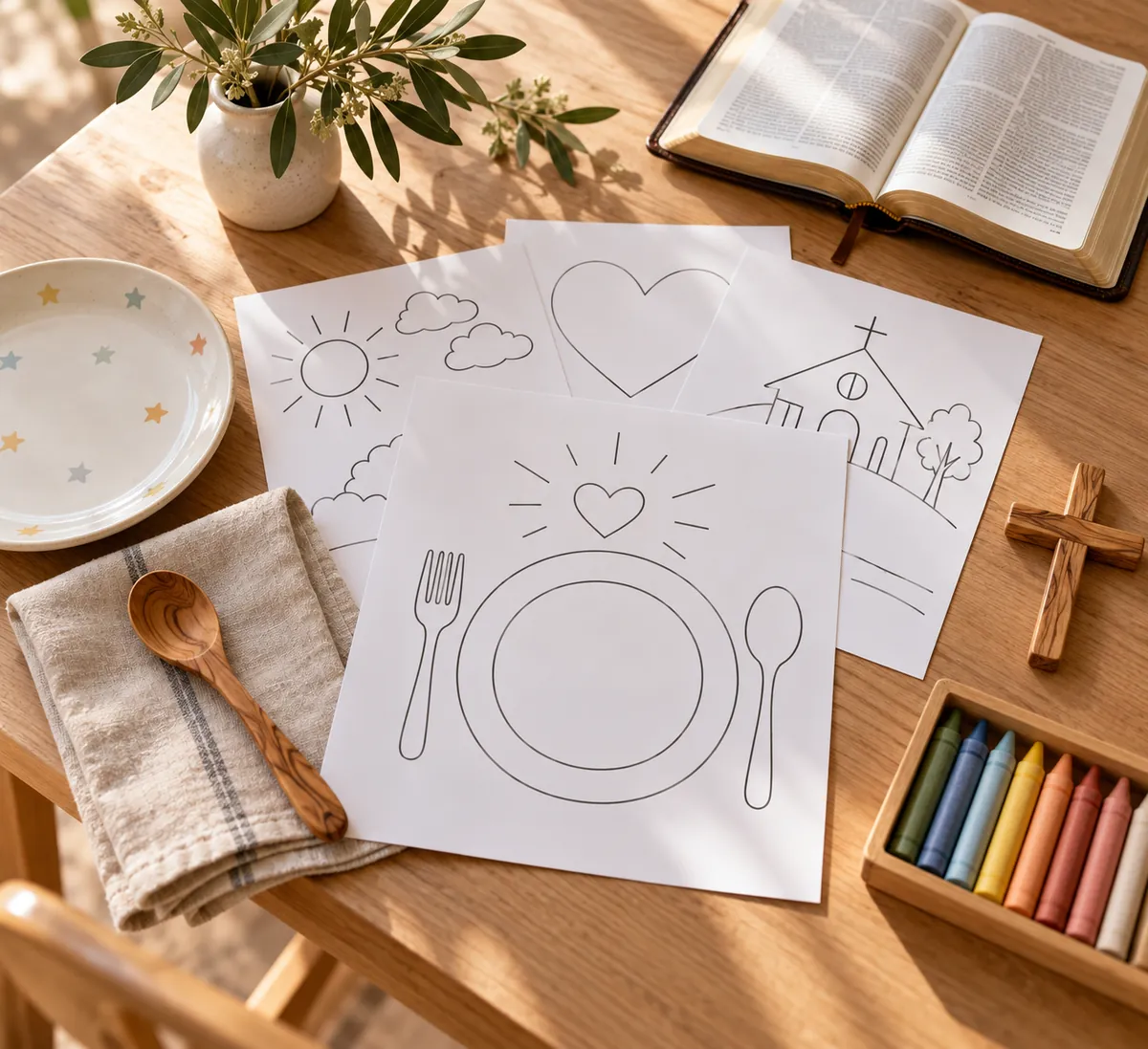
If you want something your kids can hold, color, and keep at the table, a printable Kids Prayer Worksheet gives them a visual way to fill in what they're thankful for before grace. It works well for homeschool devotion time, Sunday school, or just a quiet five minutes before dinner. You can browse more printable options in the shop if you're looking for something to pair with family devotions or classroom lessons.
Mealtime prayer doesn't need to be impressive. It just needs to be said, together, often enough that it becomes part of how your family sits down to eat. That's the whole point — not a perfect prayer, just a thankful one.
Frequently asked questions
- What is a short mealtime prayer for kids?
- A simple rhyme or phrase like 'God is great, God is good, let us thank Him for our food' works well because it is short, rhymes, and children can join in right away without reading.
- At what age can kids start saying grace?
- Toddlers around age two can join in a repeated phrase or hand motion, and by age four or five most kids can say a short grace mostly on their own with a little prompting.
- How do I get my kids to stop rushing through grace?
- Slow it down by having each person add one thing they're thankful for, or let a different child lead each night so the prayer feels like theirs instead of a formality.
- Should mealtime prayers be the same every time or different?
- A mix works best. A familiar one gives younger kids something to memorize and lean on, while occasionally changing it up or adding a thank-you keeps it from going on autopilot.
- What Bible verse can I use to explain why we pray before meals?
- First Timothy 4:4 says everything God created is good and nothing is to be rejected if it is received with thanksgiving, which is a simple way to show kids why we pause to give thanks.
- prayer
- mealtime prayers
- grace for kids
- family devotions
- kids church
- homeschool
Related reading
- How to Explain the Trinity to Kids (Without Confusing Them)Learn how to explain the Trinity to kids with simple, accurate words and examples that avoid confusing analogies and stay close to Scripture.
- Journey to Bethlehem: A Christmas Bible Map for KidsFollow the journey to Bethlehem in eight stops, from Nazareth to Egypt and home, with Bible verses and a simple family activity for each stop.
- Bible Journaling Tip-Ins for Kids: What They Are and How to Use ThemWhat Bible journaling tip-ins are, how to add them to a Bible or journal, and simple ways kids and families can use them for prayer, Bible stories and sermon notes.